 Skip to content
A few years ago, companies relied mostly on instinct and experience to make business decisions.Today, the smartest companies rely on data.
But having data alone isn’t enough. The real challenge is knowing how to analyze it, interpret it, and turn it into decisions that move the business forward.
That’s where Top Data Analytics Companies play a critical role. They help businesses turn messy spreadsheets, customer behaviour data, and operational numbers into insights that actually guide decisions. These firms combine technology, AI, and analytics expertise to help organisations uncover patterns, predict trends, and make smarter strategic decisions.
In this blog, we take a closer look at the top data analytics companies to watch in 2026 and how these organizations are helping businesses unlock the true value hidden inside their data.
Top Data Analytics Companies Transforming Business Intelligence in 2026
Data analytics has become a critical capability for organizations looking to improve decision-making, optimize operations, and uncover new business opportunities. Leading analytics companies combine data engineering, artificial intelligence, machine learning, and business intelligence tools to help businesses turn raw data into actionable insights.
The companies listed below are widely recognized for delivering enterprise analytics solutions, data platforms, consulting services, and AI-driven insights across industries such as finance, healthcare, retail, and technology.
Selection Criteria
- The companies in this list were selected based on the following factors:
- Global reputation in data analytics and business intelligence services
- Strong enterprise client base and consulting capabilities
- Advanced analytics technologies, including AI, machine learning, and cloud data platforms
- Industry recognition from reports, analyst rankings, and enterprise adoption
Learn Data Analytics and unlock high-demand career opportunities today.
Quick Comparison Table
| Company | Headquarters | Core Expertise | Key Strength |
| Accenture | Ireland | Data analytics consulting | Large-scale enterprise transformation |
| Deloitte | USA | Analytics consulting and strategy | Business intelligence and advisory |
| IBM | USA | AI, analytics platforms | Watson AI and enterprise data solutions |
| Capgemini | France | Data engineering and analytics | Cloud-based analytics transformation |
| PwC | UK | Business analytics consulting | Data-driven business strategy |
| Teradata | USA | Data warehousing | Enterprise-scale analytics platforms |
| SAS | USA | Advanced analytics software | Statistical analytics and predictive modeling |
| Alteryx | USA | Data analytics automation | Self-service analytics platform |
| MicroStrategy | USA | Business intelligence | Enterprise analytics dashboards |
| Databricks | USA | Big data and AI platforms | Lakehouse architecture for analytics |
Leading Enterprise Data Analytics Companies in 2026 (Global Rankings #1–5)
1. Accenture
Accenture is a global professional services company. It provides a wide range of data analytics, artificial intelligence, and digital transformation services to organizations across industries.
The company helps businesses modernize their data infrastructure, build data-driven strategies, and generate insights. All these help to improve decision-making and operational efficiency. Students from the certified Data Analyst Bootcamp get placed here due to a strong foundation and advanced techniques.
- Work: Offers AI, cloud, and data analytics solutions with a strong focus on data strategy, advanced analytics, and AI-driven automation.
- Scope: Helps enterprises transform raw data into actionable insights that drive innovation, efficiency, and business growth.
- Size: 700,000+ employees globally
2. Deloitte

Deloitte is one of the largest global consulting firms offering data analytics, business intelligence, and AI-powered advisory services. The company works with enterprises to build analytics capabilities that support strategic decision-making and digital transformation initiatives.
- Work: Provides data analytics consulting, AI implementation, and business intelligence solutions.
- Scope: Helps organizations leverage data for strategic planning, operational improvement, and risk management.
- Size: 450,000+ employees globally
3. IBM
IBM is a technology leader known for its enterprise data analytics platforms and AI-powered solutions. Through technologies such as IBM Watson and hybrid cloud analytics platforms, the company helps organizations analyze large datasets and build predictive models.
- Work: Develops AI-driven analytics platforms, data management systems, and enterprise AI solutions.
- Scope: Supports businesses in building predictive analytics capabilities and data-driven decision systems.
- Size: 280,000+ employees globally
4. Capgemini
Capgemini is a global consulting and technology services company specializing in data engineering, cloud analytics, and AI-driven business transformation. The company helps organizations modernize their data architecture and implement scalable analytics solutions.
- Work: Provides data engineering, big data analytics, and cloud-based analytics services.
- Scope: Enables organizations to adopt modern data platforms and advanced analytics strategies.
- Size: 350,000+ employees globally
5. PwC
PwC (PricewaterhouseCoopers) is a global professional services network offering data analytics consulting and business intelligence solutions. The firm focuses on helping organizations use data to improve risk management, compliance, and strategic decision-making.
- Work: Delivers analytics consulting, data strategy development, and business intelligence solutions.
- Scope: Helps enterprises transform data into insights that support financial planning and operational efficiency.
- Size: 360,000+ employees globally
Top Specialized Data Analytics Platforms and Technology Leaders in 2026 (Global Rankings #6–10)
6. Teradata
Teradata is a leading provider of enterprise data warehousing and analytics platforms. Its solutions help organizations store, process, and analyze massive volumes of structured and unstructured data for business insights.
- Work: Provides cloud-based data warehousing, advanced analytics platforms, and big data processing tools.
- Scope: Enables organisations to analyze large-scale datasets and improve data-driven decision-making.
- Size: ~8,000 employees globally
7. SAS
SAS is a well-established analytics software company specializing in advanced analytics, statistical modeling, and predictive analytics solutions. Its tools are widely used in industries that rely on complex data analysis.
- Work: Offers analytics software for predictive modeling, risk analysis, and data visualization.
- Scope: Helps businesses detect patterns, forecast trends, and improve strategic decision-making.
- Size: ~12,000 employees globally
8. Alteryx
Alteryx provides a powerful self-service analytics platform that allows users to prepare, blend, and analyze data without extensive coding knowledge. It is widely used by organisations looking to automate data workflows and accelerate analytics processes.
- Work: Develops analytics automation platforms for data preparation and advanced analytics.
- Scope: Helps analysts quickly transform raw data into insights using automated workflows.
- Size: ~2,500 employees globally
9. MicroStrategy
MicroStrategy is a business intelligence company known for its enterprise analytics and data visualization platforms. Its software enables organizations to build interactive dashboards and deliver real-time insights across the enterprise.
- Work: Provides BI tools, analytics dashboards, and enterprise reporting platforms.
- Scope: Enables organizations to monitor business performance through advanced data visualization.
- Size: ~2,000 employees globally
10. Databricks
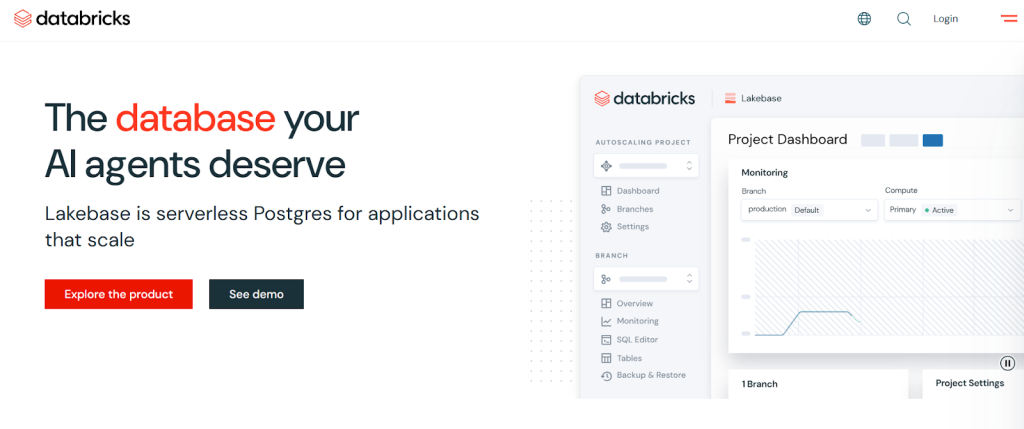
Databricks is a fast-growing data and AI company that offers a unified platform for data engineering, analytics, and machine learning. Its Lakehouse architecture combines the benefits of data lakes and data warehouses, enabling organizations to process massive datasets efficiently.
- Work: Provides unified data and AI platforms for analytics, machine learning, and big data processing.
- Scope: Helps enterprises build scalable analytics infrastructure and AI-driven applications.
- Size: ~6,000+ employees globally.
Key Services Offered by Leading Data Analytics Companies
Top data analytics companies offer a range of services that help organisations collect, process, analyse, and use data to make better business decisions. These services combine data engineering, analytics tools, and AI technologies to transform raw data into actionable insights.
- Data Strategy and Consulting: Data analytics firms help businesses create a clear data strategy and governance framework. This includes identifying data sources, building data architecture, and defining how data can support business goals.
- Business Intelligence and Visualization: Business intelligence services focus on turning complex datasets into interactive dashboards and reports. Tools like Power BI, Tableau, and MicroStrategy help organizations track performance and make faster decisions. Students can learn Business Intelligence from a certified Business Analyst Course within a very short timeline.
- Advanced Analytics and AI: Advanced analytics services use machine learning, predictive analytics, and AI models to uncover patterns in data. These insights help businesses forecast trends, automate decisions, and improve operational efficiency.
- Big Data Engineering: Big data engineering focuses on building systems that can store, process, and analyze massive datasets. Technologies such as Hadoop, Spark, and modern data platforms allow companies to handle large-scale data processing.
- Cloud Analytics Solutions: Cloud analytics platforms help businesses store and analyze data using cloud infrastructure like AWS, Azure, and Google Cloud. These solutions provide scalability, faster data processing, and reduced infrastructure costs.
- Industry-Specific Solutions: Many analytics companies develop industry-focused solutions for sectors like finance, healthcare, retail, and manufacturing. These solutions use domain-specific data models and analytics frameworks to solve industry challenges.
How to Choose the Right Data Analytics Company for Your Business
Before selecting a partner, businesses should evaluate several important factors to ensure the company can deliver reliable and scalable analytics solutions.
- Industry expertise: A good analytics partner should have experience in your specific industry. Companies that understand industry challenges and data patterns can provide more relevant insights and practical solutions.
- Technology compatibility: The analytics company should work with technologies that match your current systems. Compatibility with tools such as cloud platforms, data warehouses, and business intelligence software ensures smoother integration and faster implementation.
- Pricing transparency: Clear and transparent pricing is essential. Businesses should look for partners that provide detailed cost structures, helping avoid hidden charges and allowing better budget planning.
- Scalability factor: As data grows, analytics systems must scale accordingly. A reliable partner should provide solutions that can handle increasing data volumes and support future business expansion.
- Security and compliance: Since analytics involve sensitive data, strong security practices are critical. The partner should follow industry standards for data protection and regulatory compliance.
- Proven track record: Companies with successful projects, strong client portfolios, and positive industry recognition are more likely to deliver reliable analytics solutions and measurable business results.
Learn Python, SQL, and analytics skills employers are actively seeking from our Data Analytics Bootcamp today!
ROI and Business Impact of Data Analytics Solutions
Data analytics help businesses improve decision-making, increase revenue, and reduce operational costs. The ROI of data analytics measures how much value a company gains from analytics compared to the cost of implementing analytics tools, infrastructure, and teams. Calculating ROI and operational efficiency will help you understand the Data Analyst Job Outlook in the future to make better decisions.
Basic ROI Formula
ROI (%) = (Net Benefit from Analytics − Analytics Investment Cost) ÷ Analytics Investment Cost × 100
Here is an example:
| Analytics investment: $100,000 Business value generated: $250,000 ROI = ($250,000 − $100,000) ÷ $100,000 × 100 = 150% ROI |


