 Skip to content
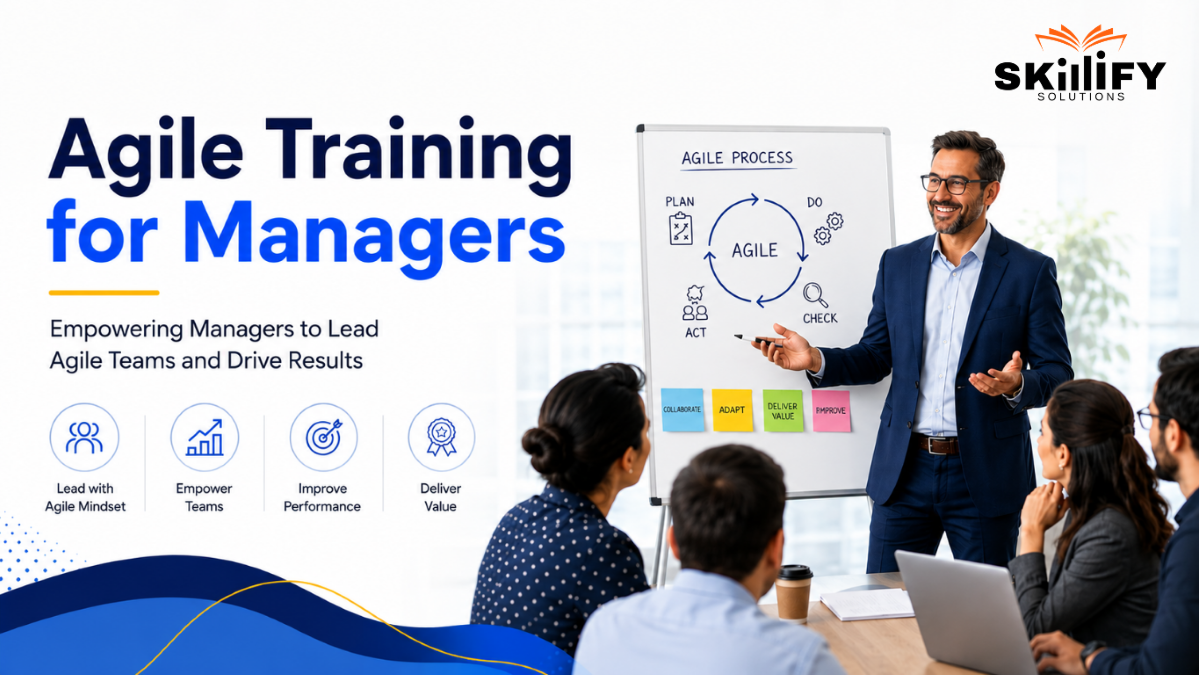
Becoming a manager doesn’t automatically prepare you to lead Agile teams. I’ve seen experienced managers struggle. This is because they rely on the command-and-control approach that worked in traditional projects. Agile demands something different.
Your role shifts from assigning tasks to coaching teams, removing blockers, aligning work with business goals, and enabling faster decisions.
That’s why Agile training for managers is a leadership upgrade. The challenge is choosing the right one. Should you start with Leading SAFe, PMI-ACP, ICP-LEA, or an executive Agile leadership program? Each serves a different purpose depending on your role and career stage.
This blog cuts through the confusion. You’ll discover the best Agile training options for every management level, compare leading certifications, understand training costs, and choose a learning path that helps you lead high-performing teams with confidence in 2026.
Best Agile Training for Managers by Role
The right learning path depends on your responsibilities, the size of your teams, and the level of business decisions you make. Most leading certification providers recommend choosing training based on your leadership role rather than your job title.
Team Leads and First-Time Managers
Focus on building a strong Agile foundation, including Scrum basics, team facilitation, sprint planning, and removing impediments. The emphasis is on enabling self-managing teams rather than directing daily work.
Managers new to Agile can strengthen their fundamentals with the SAFe for Teams 6.0 course before moving into advanced leadership certifications.
Project Managers and Mid-Level Managers
Training should cover Agile project planning, stakeholder management, value prioritization, and cross-functional collaboration. Certifications like Leading SAFe and PMI-ACP are well suited for this level.
Still comparing certifications? Explore our Top Agile Certifications guide to understand which credential best fits your experience and career goals.
Department Heads and Directors
Managers at this level should learn portfolio alignment, Lean thinking, organizational agility, and change leadership to connect business strategy with execution.
Leaders responsible for strategy and execution should consider the SAFe Lean Portfolio Management 6.0 course to align portfolios with business goals.
VPs and Executive Leaders
Executive training focuses on business agility, governance, organizational culture, and strategic decision-making rather than team-level Agile practices.
Strengthen your Agile leadership skills through the SAFe Scrum Master 6.0 Certification and empower high-performing teams.
What Managers Should Learn Before Agile Training
Successful Agile adoption begins with a leadership mindset shift. Before learning frameworks or certifications, managers should understand how Agile changes the way organizations create value.
Shift from Output to Business Outcomes
Agile measures success by customer value and business impact, not by the number of tasks completed.
Managers should learn to:
- Define measurable outcomes
- Prioritize customer value
- Track business results over activity
Learn which SAFe Agile Metrics help managers measure value delivery, predictability, and continuous improvement.
From Command-and-Control to Coaching
Modern Agile managers enable teams instead of directing every decision. Core leadership skills include:
- Coaching conversations
- Active listening
- Empowering teams
- Building accountability
- Removing impediments
Managers looking to strengthen servant leadership can also explore the SAFe Scrum Master 6.0 certification.
Build Adaptive Roadmaps Instead of Fixed Plans
Agile planning evolves as customer needs and market conditions change. Managers should understand:
- Iterative planning
- Continuous feedback
- Incremental delivery
- Reprioritization based on value
- Data-driven decision-making
Learning portfolio-level planning becomes easier with the SAFe® Lean Portfolio Management (6.0) course.
Best Agile Certifications for Managers
The right certification depends on your role and leadership goals. Team and project managers benefit from delivery-focused programs, while senior leaders should prioritize enterprise agility and strategic leadership.
| Training | Best For | Duration | Certification | Leadership Focus | Best Use Case |
| Leading SAFe | Project and team managers | 2 days | SAFe Agilist (SA) | Enterprise Agile leadership | Scaling Agile teams |
| SAFe LPM | Directors and portfolio leaders | 2–3 days | SAFe LPM | Portfolio strategy | Lean portfolio management |
| ICP-LEA | Agile leaders and coaches | 2–3 days | ICP-LEA | Coaching leadership | Leading Agile transformations |
| PMI-ACP | Project managers | Exam-based | PMI-ACP | Agile project delivery | Multi-framework Agile projects |
| Harvard Agile Leadership | Executives | Varies | Certificate of Completion | Strategic leadership | Enterprise business agility |
Drive business agility and strategic execution by earning the SAFe Lean Portfolio Management 6.0 Certification today.
Agile Training for Non-Technical Managers
You don’t need a technical background to become an Agile leader. Agile training helps managers improve teamwork, respond faster to change, and make better business decisions.
Agile Fundamentals for Business Leaders
Start with the basics like Agile values, customer focus, collaboration, and continuous improvement. Technical knowledge isn’t required.
Applying Agile in HR, Finance, Marketing and Operations
Simple practices like short planning cycles, daily check-ins, visual task boards, and regular feedback can improve how any team works.
Real-World Agile Management Beyond IT
- Marketing: Plan and adjust campaigns faster.
- HR: Improve hiring and employee programs.
- Finance: Review budgets for smaller cycles.
- Operations: Solve issues quickly and streamline processes.
If you’re exploring multiple certification options, our Top Agile Certifications comparison can help you make a more informed choice.
Agile Training Cost for Managers in 2026
Training costs vary based on the provider, certification, and delivery format. Public courses are ideal for individuals, while corporate training is designed for teams and organizations.
Training Costs by Course Type
| Training Type | Typical Cost |
| Self-paced Agile courses | $50–$300 |
| Instructor-led public training | $600–$1,500 |
| SAFe certification courses | $800–$1,400 |
| Executive leadership programs | $2,000–$5,000+ |
Public vs. Corporate Agile Training
| Public Training | Corporate Training |
| Best for individuals | Best for teams and organizations |
| Fixed schedules | Flexible scheduling |
| Standard curriculum | Customized to business needs |
| Lower cost per learner | Better value for larger groups |
Measuring Agile Training ROI
Measure ROI by comparing the training cost with improvements in team productivity, faster delivery, better collaboration, and reduced rework. If teams deliver more value in less time, the investment is paying off.
AI-Native Agile Leadership for Managers
AI is becoming part of everyday Agile work, helping teams plan, analyze, and deliver faster. Managers must learn to use AI effectively while ensuring decisions remain aligned with business goals.
The Leading SAFe 6.0 course demonstrates how AI supports backlog management, planning, and decision-making in modern SAFe environments.
How AI Is Changing Agile Leadership
AI can handle repetitive work such as sprint summaries, backlog analysis, meeting notes, and risk identification. For example, instead of spending hours preparing a PI Planning report, managers can use AI to generate insights and focus on discussing priorities with stakeholders.
AI Governance for Agile Managers
As teams adopt AI, managers should establish clear guidelines for their use. This includes protecting sensitive business data, checking AI-generated outputs for accuracy, and ensuring decisions are fair and transparent.
Example: If AI suggests removing a backlog item, validate its business impact before changing priorities. Managers leading organizational change should also understand how Agile Transformation reshapes teams, culture, and business processes.
Leading Teams in an AI-Assisted Workplace
AI can provide recommendations, but managers remain responsible for setting up priorities, coaching teams, resolving conflicts, and making strategic business decisions. Leadership cannot be automated.
Tip: Treat AI as a decision-support tool and not a decision-maker.
To learn how AI integrates with enterprise Agile, the Leading SAFe 6.0 course covers AI-enabled planning and decision-making alongside SAFe practices.
How to Measure Agile Training Success
The impact of Agile training should be visible in how teams collaborate, make decisions, and deliver value.
Teams Take Greater Ownership
After training, teams should solve problems independently, volunteer for responsibilities, and require less day-to-day direction.
Example: Instead of waiting for manager approval, the team prioritizes work together and takes ownership of delivery.
Managers Remove Impediments Faster
Effective managers spend less time assigning tasks and more time eliminating blockers such as approval delays, resource constraints, or communication gaps.
Tip: Ask teams regularly, “What’s slowing you down?” and act quickly to remove those obstacles.
Decisions Move Closer to Teams
Well-trained managers empower teams to make routine delivery decisions while leadership focuses on strategy and business outcomes.
Example: A product team adjusts sprint priorities based on customer feedback without waiting for multiple approval levels, enabling faster delivery and better responsiveness.
Which Agile Training Path is Right for You?
Choose your training based on your current role and leadership responsibilities. Starting with the right certification helps you build practical Agile skills that match your career goals.
| Your Role | Recommended Starting Point |
| Team Lead | SAFe for Teams |
| Project Manager | Leading SAFe |
| Department Manager | Leading SAFe |
| Director | SAFe LPM |
| VP or C-Suite | Agile Leadership and Framework Awareness |
| Non-Technical Manager | Agile Leadership Fundamentals and Leading SAFe |
Product leaders looking to strengthen customer-centric planning should explore the SAFe Agile Product Manager Certification guide.
Conclusion
Choosing the right Agile training starts with understanding your role and career goals. While team leads may benefit from Agile fundamentals, managers and executives often need leadership-focused programs like Leading SAFe.
The right course helps you lead teams more effectively, adapt to change, and deliver better business outcomes. As AI becomes a part of Agile ways of working, managers also need skills in coaching, decision-making, and responsible leadership.
Use this guide to compare your options and choose the Agile training that best supports your growth as a leader.
Future-proof your leadership career with our SAFe 6.0 courses and confidently lead Agile transformation initiatives.
Frequently Asked Questions
1.Do managers need Agile training if their teams are already certified?
Yes. Managers need Agile training to lead effectively, remove blockers, support teams, and align Agile practices with business goals.
2.Is Leading SAFe good for managers?
Yes. Leading SAFe from Skillify Solutions is one of the best certifications for managers who lead Agile teams or support enterprise Agile transformations.
3. Can non-technical managers become effective Agile leaders?
Absolutely. Agile leadership focuses on collaboration, coaching, and business value, not technical expertise.
4.How long does it take to see results from Agile training?
Most organizations begin seeing improvements in team collaboration and decision-making within 2–6 months, depending on how consistently Agile practices are applied.
5.What does AI-Native SAFe mean for managers in 2026?
AI-Native SAFe integrates AI into Agile workflows, helping managers make faster decisions while maintaining human oversight, governance, and strategic leadership.


