Introduction
Let’s say you want to build a career in AI. You start researching and immediately run into two job titles: Data Scientist and Machine Learning Engineer. At first glance, they seem almost identical. Both work with data, algorithms, and machine learning models. And both offer impressive salaries.
So, what’s the difference?
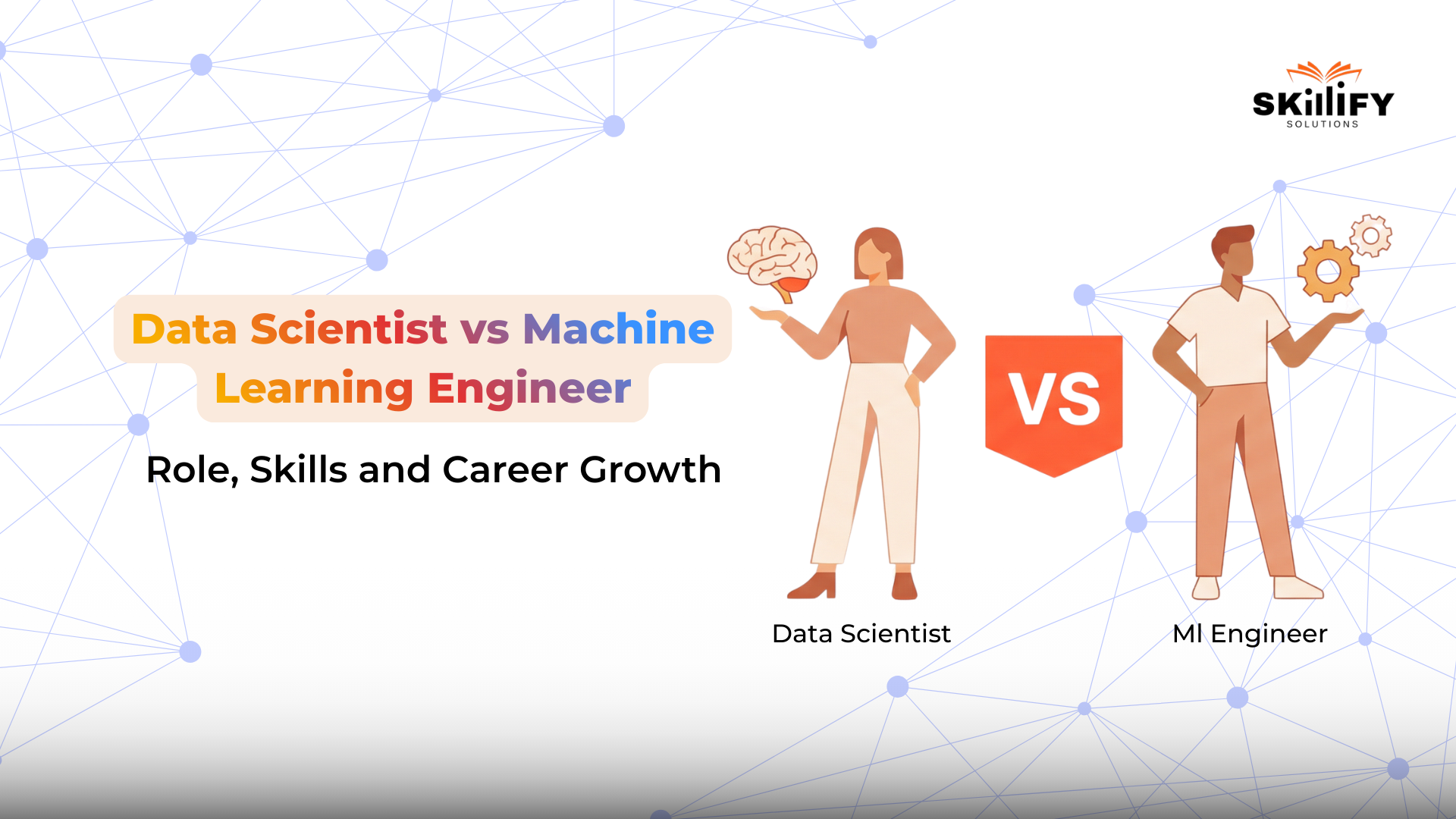
In simple terms, Data Scientists focus on understanding data, while Machine Learning Engineers focus on building systems that make models work in real products.
For example, when Netflix recommends a movie, a Data Scientist may design the prediction model. However, a Machine Learning Engineer builds the infrastructure that delivers that recommendation to millions of users in real time.
The confusion is understandable because the roles often overlap. But the skills, responsibilities, and long-term career paths can differ significantly.
In this blog, we’ll break down the key differences in roles, skills, salaries, and career growth. This is to help you decide which path fits you best.
Data Scientist vs Machine Learning Engineer: Key Differences
A Data Scientist focuses on understanding historical and current data to derive insights that inform business decisions. They work with data exploration, visualisation, and basic predictive modeling.
On the other hand, a Machine Learning Engineer focuses primarily on turning models into scalable, optimized services that can be deployed and used in real-world applications. Let’s understand Data Scientist vs Machine Learning Engineer with various aspects:
| Aspect | Data Scientist | Machine Learning Engineer |
| Primary Focus | Analyzing data to extract insights and support decisions, reporting, dashboards | Designing, building, and scaling machine learning models in production |
| Main Goal | Provide actionable insights and guide business strategy | Create reliable ML systems that run at scale and deliver predictions |
| Key Responsibility | Data cleaning, exploration, visualization, statistical analysis | Model deployment, system architecture, optimization, and monitoring |
| Work Output | Reports, dashboards, insights, predictive models for decision-making | Production-ready ML services, APIs, model pipelines |
| Collaboration | Works closely with business stakeholders, analysts, domain experts | Works with software engineers, DevOps, and data engineers |
| Technical Depth | Strong analytical/statistical skills, moderate software engineering | Deep software engineering, system design, scalable architecture |
What Does a Data Scientist Do?
A Data Scientist analyzes large volumes of data to discover patterns, generate insights, and support business decision-making. Their role sits at the intersection of statistics, programming, and domain expertise. They explore datasets, build predictive models, and translate complex findings into actionable recommendations for organizations.
Typical responsibilities include:
- Collecting, cleaning, and preparing structured and unstructured data
- Analyzing datasets to identify trends and patterns
- Building predictive models using machine learning techniques
- Visualizing insights through dashboards or reports
- Communicating results to business stakeholders
In simple terms, a data scientist turns raw data into insights that guide strategy, forecasting, and decision-making across industries. Structured programs like a Data Science Bootcamp can help build the practical Python and deployment skills required for future careers.
What Does a Machine Learning Engineer Do?
A Machine Learning Engineer focuses on designing, building, and deploying machine learning systems that operate at scale in real-world applications. While data scientists often experiment with models, ML engineers transform those models into reliable software systems used by products and services.
Common responsibilities include:
- Developing and training machine learning models
- Selecting and optimizing algorithms for specific problems
- Deploying models into production environments
- Building data pipelines and scalable ML systems
- Monitoring and improving model performance over time
Machine learning engineers combine software engineering, machine learning, and system architecture to create AI-driven applications such as recommendation engines, fraud detection systems, and speech recognition tools.
Skills Comparison: Data Scientist vs Machine Learning Engineer
Before deciding which career path suits you better, it’s important to understand the skill set each role demands. While both Data Scientists and Machine Learning Engineers work with data and machine learning models, the depth and focus of their skills differ.
Data Scientists lean more toward statistics, data analysis, and storytelling with data, whereas Machine Learning Engineers emphasize software engineering, scalable systems, and model deployment. The table below highlights how the required skills compare across both roles.
| Skill Area | Data Scientist | Machine Learning Engineer |
| Core Programming | Python, R, SQL | Python, Java, C++, SQL |
| Mathematics and Statistics | Strong emphasis on statistics, probability, hypothesis testing | Moderate statistics, more algorithm optimization |
| Machine Learning | Model experimentation and analysis | Model optimization, deployment, and scaling |
| Data Handling | Data cleaning, exploratory analysis, visualization | Data pipelines, feature engineering, large-scale processing |
| Software Engineering | Basic scripting and experimentation | Strong engineering practices, system architecture |
| Tools and Frameworks | Pandas, NumPy, Tableau, Scikit-learn | TensorFlow, PyTorch, Kubernetes, ML pipelines |
From the above table, it can be said that Data Scientists focus more on analyzing data and generating insights, while Machine Learning Engineers focus on building scalable AI systems that bring those insights into production environments.
Start your career with this practical AI Data Science bootcamp today!
Programming Languages Breakdown
Both roles rely heavily on programming, but the usage differs slightly. Data Scientists typically work with languages like Python, R, and SQL for data analysis, statistical modeling, and experimentation.
Machine Learning Engineers also use Python, but they may additionally use languages such as Java, Scala, or C++ to build scalable machine learning systems and integrate models into software applications.
Technical Skills and Tools
Data Scientists focus more on data exploration, statistical analysis, data visualization, and predictive modeling. Their work often involves cleaning datasets, identifying patterns, and communicating insights through dashboards or reports. Learning Data Science through hands-on projects and guided mentorship can significantly accelerate your transition into the AI field.
Machine Learning Engineers, on the other hand, emphasize software engineering, model optimization, data pipelines, and system performance, ensuring machine learning models function efficiently in real-world production environments.
AI/ML Frameworks and Cloud Platforms
Both professionals use machine learning frameworks, but their depth of usage can differ. Data Scientists often use frameworks such as Scikit-learn, TensorFlow, or PyTorch primarily for experimentation and model development.
Machine Learning Engineers use these frameworks for training, scaling, and deploying models, often integrating them with cloud platforms like AWS, Google Cloud, or Azure to support large-scale applications.
Educational Requirements and Career Paths
Both Data Scientists and Machine Learning Engineers typically come from strong technical or analytical backgrounds. However, the educational paths and career progression can vary depending on the role and specialization.
Degree Requirements
Most professionals in these roles hold degrees in fields such as Computer Science, Data Science, Statistics, Mathematics, Artificial Intelligence, or Engineering. These programs build the foundation in programming, statistics, algorithms, and data analysis required for both careers.
Data Scientist
Most Data Scientists come from academic backgrounds such as Data Science, Statistics, Mathematics, Computer Science, or Economics. These fields provide a strong foundation in statistical analysis, programming, and data interpretation, which are essential for turning raw data into meaningful insights.
Common educational paths include
- Graduation or Post Graduation degree in Data Science, Statistics, Mathematics, or Computer Science
- Training in probability, statistical modeling, and data analysis
- Practical experience with tools like Python, SQL, and data visualization platforms with a Data Science Bootcamp.
Many professionals also transition into this role through data science bootcamps or certification programs, especially career switchers who want to build applied skills quickly.
If you’re planning to specialize in this field, exploring the Best Online Data Science Master’s programs can help you build deeper expertise in AI and machine learning.
Machine Learning Engineer
Machine Learning Engineers typically come from more engineering-focused academic backgrounds, since the role involves building and deploying machine learning systems at scale. Their education often emphasizes programming, algorithms, and system design.
Typical educational backgrounds include:
- Bachelor’s or Master’s degree in Computer Science, Artificial Intelligence, Software Engineering, or Machine Learning
- Strong foundations in algorithms, data structures, and software development
- Experience with programming languages such as Python, Java, or C++
- A Data Science Bootcamp can also help to accelerate your career as an ML junior role.
Some professionals also enter the field through AI or machine learning bootcamps, which focus on practical system-building skills.
Career Progression Roadmap
Although the starting points may overlap, long-term career paths for these roles can diverge.
Typical Data Scientist Career Path
- Data Analyst
- Junior Data Scientist
- Data Scientist
- Senior Data Scientist
- Lead Data Scientist or Head of Data Science
This path emphasizes data interpretation, advanced analytics, and strategic decision-making.
Launch your AI career with hands-on data science training today
Typical Machine Learning Engineer Career Path
- Software Engineer or ML Intern
- Machine Learning Engineer
- Senior Machine Learning Engineer
- AI Engineer or ML Architect
- Director of AI or Machine Learning
This path focuses more on engineering robust AI systems and deploying scalable machine learning solutions.
In practice, the boundaries between these roles can overlap. Many professionals transition between analytics, machine learning, and engineering roles as they gain experience and specialize in specific technologies.
Salary and Job Market Outlook
Salary Comparison
Both Data Scientists and Machine Learning Engineers are among the highest-paying roles in the U.S. tech industry. As organizations invest heavily in AI, predictive analytics, and automation, the demand for professionals who can analyze data and build intelligent systems continues to grow rapidly.
| Role | Entry-Level Salary | Mid-Level Salary | Senior-Level Salary |
| Data Scientist | $63,000 – $86,000 | $73,000 – $144,000 | $100,000 – $138,000+ |
| Machine Learning Engineer | $93,000 – $127,000 | $125$+ | $107,000 – $139,000+ |
Machine Learning Engineers often earn slightly higher salaries because their work involves production systems, model deployment, and scalable AI infrastructure, which require deeper engineering expertise.
Many students pursuing AI-related degrees eventually explore specialized roles like AI Engineer vs Machine Learning Engineer before deciding their career path.
Job Market Outlook
The job market for both roles remains extremely strong globally as businesses across industries adopt AI and data-driven decision-making.
Key trends shaping the market include:
- Rapid AI adoption: Companies are investing heavily in machine learning, generative AI, and automation.
- Data-driven business decisions: Organizations rely on Data Scientists to interpret large datasets and guide strategy.
- AI-powered products: Machine Learning Engineers are essential for building recommendation engines, fraud detection systems, and intelligent applications.
According to U.S. labor market projections, data-related roles are expected to grow significantly over the next decade, making both careers highly stable and future-proof.
Where is the Demand Highest?
Several industries and tech hubs are leading the hiring demand:
- Technology companies building AI-driven products
- Finance and fintech for fraud detection and predictive analytics
- Healthcare and biotech for medical data analysis and AI diagnostics
- E-commerce platforms for recommendation systems and customer analytics
Join the Data Science Bootcamp and build your AI future!
Data Scientist vs Machine Learning Engineer: Which Career is Right for You?
The real difference between Machine Learning Engineer and a Data Scientist comes down to what kind of work you enjoy doing every day.
If you enjoy analyzing data, finding patterns, and explaining insights, the Data Scientist path may suit you better. Data Scientists spend a lot of time exploring datasets, building predictive models, and communicating results to business teams. Their role often sits at the intersection of analytics, statistics, and business decision-making.
If you enjoy building systems, writing production-level code, and deploying models into real applications, the Machine Learning Engineer path might be a better fit. ML Engineers focus on taking machine learning models and turning them into scalable products that work reliably in real-world environments. These roles are often pursued by graduates from some of the Top Degrees in Demand for the future, including artificial intelligence and data science.
Choose Data Science if you enjoy:
- Data analysis and storytelling
- Statistics and experimentation
- Business insights and decision support
Choose Machine Learning Engineering if you enjoy:
- Software engineering and system design
- Model deployment and optimization
- Working with large-scale AI infrastructure
Conclusion
By now, the differences between Data Scientists and Machine Learning Engineers should feel much clearer. Both roles are essential in modern AI teams, but they solve different kinds of problems.
Data Scientists help organizations understand data and make better decisions, while Machine Learning Engineers ensure those models work reliably on scale in real-world systems. The truth is that both career paths offer excellent salaries, strong job demand, and long-term growth opportunities. The best path ultimately depends on what kind of work energizes you every day.
If you enjoy analyzing data and telling stories through insights, data science may be your path. If you prefer building production-ready AI systems and engineering solutions, machine learning engineering might be the right direction. Either way, the future of tech belongs to professionals who can combine data, algorithms, and real-world problem solving.
Explore the Data Science Bootcamp from Skillify Solutions to enter the AI industry!
Frequently Asked Questions
1. What’s the biggest overlap between Data Scientists and Machine Learning Engineers?
Both roles work with machine learning models, Python programming, and data pipelines. Data Scientists typically build and experiment with models, while ML Engineers focus on deploying and scaling them. In many companies, especially startups, the same person may handle both responsibilities.
2. How do companies decide whether to hire a Data Scientist or a Machine Learning Engineer?
Companies hire Data Scientists when they need insights, predictive analysis, and data-driven decision-making. They hire Machine Learning Engineers when they need production systems that deploy and scale machine learning models in applications or products.
3. Is Machine Learning Engineering more future-proof than Data Science?
Both careers are future-proof because demand for AI and data expertise continues to grow. Data Scientists help organisations interpret data, while ML Engineers build scalable AI systems. As AI adoption increases, both roles remain critical in modern technology teams.
4. Can you work remotely as a Data Scientist or Machine Learning Engineer?
Yes. Many companies offer remote or hybrid roles for both careers because most tasks like data analysis, coding, and model development can be done online using collaboration tools like Git, Slack, and cloud platforms. Remote work has become common in AI and data roles.
5. What industries hire more Machine Learning Engineers than Data Scientists?
Industries building AI-driven products often hire more ML Engineers. These include technology companies, autonomous systems, fintech, robotics, and large-scale SaaS platforms where models must run reliably in production environments.