In today’s hyper-active IT market, the organizational challenge shifts from managing tasks to coordinating complex and multi-departmental ecosystems. This is where the Scaled Agile Framework (SAFe) provides a critical edge.
According to the 15th State of Agile Report, 37-38% of respondents identified SAFe® as the most widely adopted framework for scaling Agile. This is making it a clear leader among enterprise transformation models. But SAFe is a culture of collaboration. So, what is the secret to making it work?
You can integrate SaFe tools to bridge the gap between planning and execution. By weaving together Lean, DevOps, and Systems Thinking, these tools transform chaotic departments into a unified force. The focus is on one thing, which is delivering high-value outcomes with total transparency.
To help you stay ahead, we have curated a definitive list of the top 10 Scaled Agile Framework tools for the coming year. We’ll break down their core features, learning outcomes, and how they empower teams to deliver high-quality results at scale. Read on to learn more!
What is a Scaled Agile Framework (SAFe) Framework?
The Scaled Agile Framework (SAFe) is a structured way to apply Agile practices across large organizations with multiple teams working on the same product or portfolio. Organizations have chosen it as their main approach to work in an Agile way without losing alignment, planning, and control.
In simple terms, while standard Agile, like Scrum is built for a team of 10, SAFe is the operating system that coordinates hundreds or thousands of people working on the same product. The SaFe tools combine ideas from Agile, Scrum, Lean, and DevOps to deliver value faster while maintaining strategy alignment.
SAFe was created by Dean Leffingwell in 2011 to solve the challenge of scaling Agile beyond small teams. As Agile became popular, large enterprises needed a structured model to coordinate hundreds of teams. SAFe was developed to meet that need.
The core idea of SaFe is to organize people into ARTs (Agile Release Trains) long-lived teams of teams that plan, build, and ship software together on a synchronized schedule. Many professionals begin with a Leading SAFe® Certification to build a strong foundation.
10 Scaled Agile Framework Tools Comparison Table
There are specific goals that you need to consider before you select a SaFe (Scaled Agile Framework) tool. It depends on whether you are trying to master PI (Program Increment) Planning with Bootcamp Training Certifications, manage a Portfolio, or simply improve Team Flow.
The table below compares the most mentioned tools from industry leaders to help you identify where to start your practice.
| Tool | Best of Learning | What You can Practice | Ease of Use | Free Access | Career Relevance |
| Jira Align | SAFe at scale, portfolio, or program | Real-time monitoring, Align strategy, execution, and PI planning | Moderate | No | Very High |
| VersionOne (Digital.ai) | Agile fundamentals | Portfolio and program-level planning | Medium | No | High |
| PlanView AgilePlace | Portfolio-level planning | Strategic alignment, roadmap view. Kanban, Agile/Lean/SAFe Support. | Medium | No | High |
| Rally Software | Enterprise Agile scaling, Iteration tracking | Backlog management, dependencies, and reporting. | Medium | No | High |
| Azure DevOps | Agile/Scrum basics, Pipelines for CI/CD automation | Boards, backlogs, repos, pipelines | Easy to Medium | Yes | High |
| Kendis | PI (Program Increment) Planning and alignment at scale. | Scaled Agile Framework tools | Medium | Trial (free 10 days) | High |
| Monday.com | Agile workflows and teamwork. | Boards, dependencies, dashboards, Project Management, Kanban/Gantt Charts. | Easy | Yes (free tier) | Medium–High |
| ServiceNow | Enterprise Agile flows and dashboards | Kanban boards and dashboards | Medium | No | High |
| SwiftKanban | Kanban basics and defining WIP (Work-in-Progress) Limits. | Visual workflow boards, cumulative flow diagrams | Easy | Limited | Medium |
| SpiraPlan | Agile lifecycle learning, risk management | Tracking scheduling across projects, test management, and issue tracking. | Medium | Limited | Medium to High |
While tools help you practice workflows, enrolling in a SAFe certification course or bootcamp provides structured learning, exam preparation support, and real-world case studies.
Intensive SAFe bootcamps often include simulated PI Planning sessions, ART coordination exercises, and hands-on tool exposure to prepare you for enterprise environments.
What You Can Learn Using Scaled Agile Framework Tools?
SAFe tools such as Jira Align, Azure DevOps, Rally, Kendis, Monday.com, and Planview help you understand how large enterprises implement the scaled agile in real environments. These tools simulate how strategy, planning, execution, and delivery are connected across multiple teams.
Below are the points that you can learn by practically using these tools:
1. PI (Program Increment) Planning and Cross-Team Alignment
You can learn and practice full PI Planning with tools like Kendis and Jira Align. You also learn how multiple Agile teams plan together, identify dependencies, and align work with their business goals. This directly supports the benefit of SaFe with better alignment and collaboration.
You can practice:
- Creating and managing Program Increments (8 -12-week cycles)
- Visualizing cross-team dependencies
- Managing risks using ROAM techniques
- Aligning team objectives with portfolio goals
2. Backlog and Sprint Management at Scale
Scaled Agile tools like Azure DevOps, Rally, or Monday.com help you learn how team-level work connects to enterprise-level planning. This helps you understand how SAFe improves faster time to market through structured execution.
Here you can practice:
- Creating epics, features, and user stories
- Managing sprint boards and Kanban flows
- Linking development work to business initiatives
- Tracking velocity and iteration progress
3. Portfolio and Strategy Alignment
Tools like Planview and Jira Align allow you to map strategic themes to execution work. These tools help reinforce SAFe’s core strength by connecting strategy with execution.
Here you can learn how:
- Enterprise goals translate into portfolio epics
- Budgets are allocated using Lean Portfolio Management
- Roadmaps align business and technology teams
- Leadership dashboards track value delivery
4. Built-in Quality and Continuous Delivery
Azure DevOps with CI/CD pipelines and Rally helps you to integrate development workflows with quality tracking. This supports SAFe’s benefit of building better products with built-in quality.
Here you can learn:
- Continuous integration and deployment
- Defect tracking and quality metrics
- Test automation visibility
- Release management across teams
5. Metrics, Productivity and Continuous Improvement
Most SAFe tools provide dashboards and analytics. This helps to build an understanding of SAFe’s principle of continuous improvement and increased productivity.
With these SaFe tools you can practice:
- Tracking cycle time and lead time
- Identifying workflow bottlenecks
- Measuring team productivity
- Running Inspect & Adapt sessions
6. Enterprise Collaboration and Transparency
Tools like Kendis, Jira Align, and Monday.com provide visual program boards and shared dashboards. These strengthen two major benefits of SAFe, which are employee engagement and enterprise-wide collaboration.
You learn how:
- Multiple teams collaborate across departments
- Leadership gains visibility into progress
- Silos are reduced through shared planning systems
Scaled Agile tools transform concepts into practical enterprise skills. That is why they are highly relevant for roles such as Agile Coach, Release Train Engineer, Product Manager, and SAFe Program Consultant.
Best Scaled Agile Framework Tools by Role
For Scrum Masters
Scrum Master focuses on team execution by removing impediments, improving flow, and ensuring Agile practices. They need tools that provide clear visibility into sprint progress, team performance, risks, and cross-team dependencies in scaled environments.
Here are the best Scaled Agile Framework Tools for Scrum Masters:
Azure DevOps
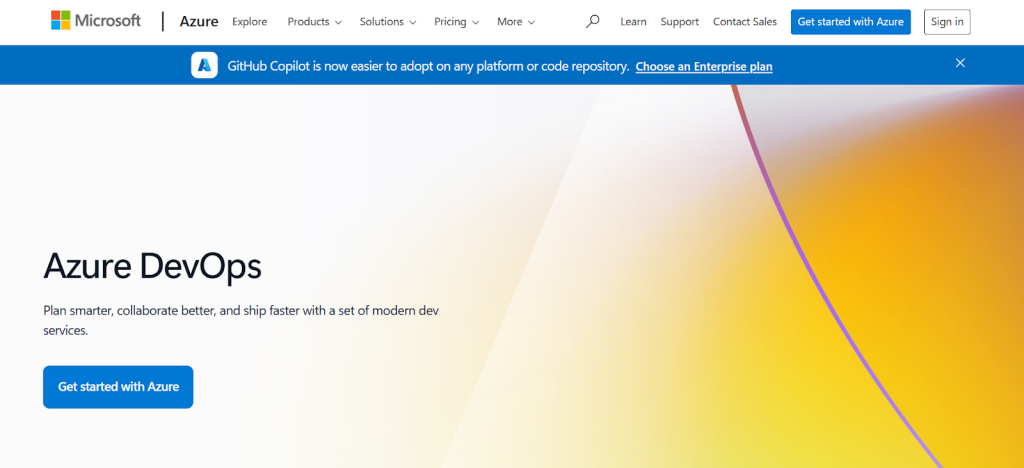
It is a comprehensive Agile and DevOps platform that supports planning, development, and delivery in one system. Manages sprint boards, tracking velocity, and integrate development workflows with Agile planning.
Key Features:
- Backlog hierarchy (Epics → Features → User Stories)
- Sprint and Kanban boards
- Dashboards and reporting tools
- CI/CD pipelines integration
- Release and deployment tracking
Rally
Rally is an enterprise Agile management tool designed for large-scale backlog and iteration tracking. This tool is recommended for detailed backlog tracking, iteration monitoring, and enterprise-level Agile reporting.
Key Features:
- Scaled backlog management
- Iteration and release planning
- Portfolio-level visibility
- Advanced Agile reporting
- Metrics tracking (velocity, burn-down)
Jira Align
Provides visibility into cross-team alignment and ensures sprint execution supports program objectives.
Key Features:
- Portfolio road mapping
- Strategy-to-execution alignment
- Program Increment (PI) tracking
- Lean Portfolio Management support
- Executive dashboards and analytics
Monday.com
This SaFe tool is a flexible work management platform adaptable for Agile workflows and team collaboration. Offers simple, visual boards that help Scrum Masters monitor tasks and improve team collaboration.
Key Features:
- Customizable task boards
- Timeline and roadmap views
- Workflow automation
- Collaboration dashboards
- Integration with external tools
Kendis
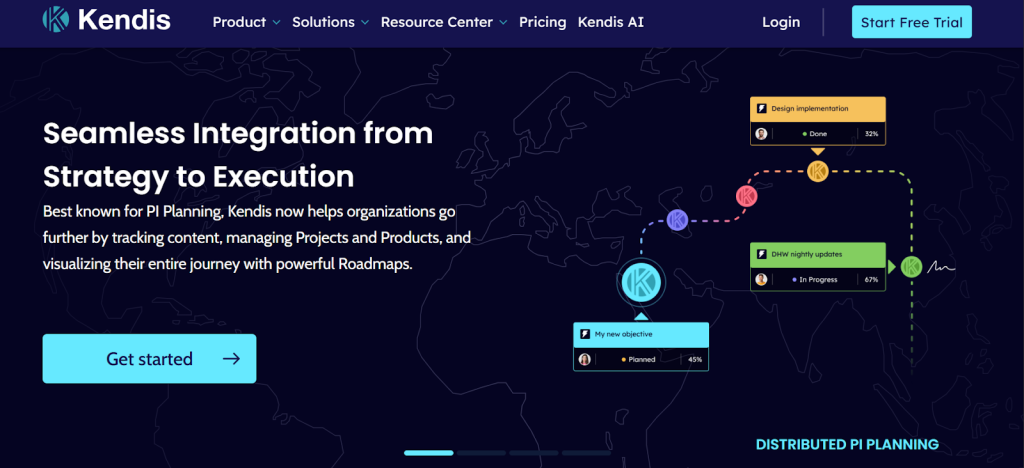
Kendis is a scaled Agile planning tool focused on PI Planning and cross-team coordination. Visualize dependencies and coordinate across multiple teams during PI Planning and program execution.
Key Features:
- Visual Program Boards
- Cross-team dependency mapping
- PI objectives tracking
- Risk management (ROAM) tracking
- Integration with Jira and Azure DevOps
Build confidence in SAFe principles, PI Planning, and Lean-Agile leadership with the Leading SAFe® Certification.
For Product Owners and Product Managers
Product Owners and Product Managers maximize value by prioritizing backlogs, defining features, and aligning product direction with enterprise strategy. They require Scaled Agile framework SaFe Tools that provide strong roadmap visibility, portfolio alignment, and structured backlog management.
Here are the preferred tools for Product Owners and Product Managers
Jira Align
A strategic Agile platform that connects product strategy with team execution. It enables Product Managers to link enterprise objectives directly to epics, features, and delivery of progress.
It will be ideal for linking business strategies with epics and features, along with maintaining visibility across Agile Release Trains.
VersionOne (Digital.ai)
VersionOne is an enterprise Agile lifecycle management platform designed to support scaled Agile and SAFe implementations. It helps Product Managers manage epics, features, and portfolios while maintaining visibility across multiple teams.
It is particularly useful for aligning portfolio strategy with program execution and tracking delivery at scale.
Key Features:
- Portfolio and program-level planning
- Backlog hierarchy management
- Cross-team visibility
- Release forecasting
- Enterprise Agile reporting
Planview
A portfolio and investment management tool designed for enterprise planning. It ensures product investments and roadmaps align with strategic business objectives. It is recommended for portfolio-level planning and ensuring investments that align with organizational goals.
Key Features:
- Portfolio planning and budgeting
- Strategic roadmap visualization
- Resource and capacity planning
- Investment tracking
- Business outcome dashboards
ServiceNow
ServiceNow’s Agile Development module integrates Agile execution with enterprise IT workflows. It allows Product Managers to connect feature development with operational and service delivery systems.
Key Features:
- Agile boards and sprint tracking
- Enterprise dashboards
- Integration with ITSM workflows
- Release planning support
- Cross-department visibility
Get certified with the Leading SAFe® Certification courseand prepare for real enterprise challenges.
For SAFe Certification Aspirants
Professionals preparing SAFe certifications need hands-on exposure to understand how scaled agile functions in real enterprise environments. Practical tool usage strengthens conceptual clarity and builds confidence for interviews and real-world roles.
Here are the suitable Scaled Agile Framework (SaFe) Tools
SwiftKanban
SwiftKanban is a visual workflow management tool designed to improve process efficiency through Kanban practices. It is particularly helpful for understanding flow-based work systems and WIP limits. It helps aspirants learn practical Kanban implementation, which is a core component within SAFe.
Key Features:
- Visual workflow boards
- Cumulative flow diagrams
- WIP limit tracking
- Process bottleneck analysis
- Lean workflow optimization
SpiraPlan
SpiraPlan is an Agile lifecycle and risk management platform that supports project tracking, issue management, and test coordination. It provides exposure to quality management practices in scaled environments.
Key Features:
- Project scheduling and tracking
- Test management integration
- Risk and issue tracking
- Release management
- Cross-project reporting
Azure DevOps: It helps to practice sprint planning, backlog structuring, and understand Agile workflows in a practical setup.
- Kendis: Effective for learning PI Planning, dependency mapping, and program-level coordination.
- Monday.com: Good for understanding task visualization and Agile collaboration basics.
- Rally: Useful for exploring enterprise Agile tracking and scaled backlog management.
- Jira Align: Strong platform for grasping portfolio alignment and strategy-to-execution flow within SAFe.
How to Choose the Right Scaled Agile Framework Tool
The SaFe tool you would select for your business must support real workflows such as PI Planning, dependency tracking, backlog hierarchy, and executive reporting. It should also match the needs of Scrum Masters, Product Managers, RTEs, and leadership simultaneously.
Instead of choosing based on brand name, you can evaluate maturity level, scalability, integration capability, cost factors, and user adoption through a structured, step-by-step selection approach.
- Step 1: First, understand your Agile maturity. Understand whether you are at team-level Agile, program-level scaling, or full enterprise SAFe. Choose a tool that supports the Scaled Agile framework (SaFe) and fits your current stag, but can scale as you grow.
- Step 2: Secondly, clarify what Scrum Masters, Product Managers, RTEs, and leadership require. It can be sprint boards, PI planning, dependency tracking, or portfolio dashboards.
- Step 3: You must include representatives from teams and leadership to ensure the tool supports real workflows across levels.
- Step 4: Then select a tool that allows customization, integrations, and multiple views for teams and programme to adapt as your SAFe implementation evolves.
- Step 5: Cloud-based solutions typically offer better scalability and support teams that are distributed.
- Step 6: Look for factors in training, customization, maintenance, and long-term scaling costs.
- Step 7: Test the tool with a small team or ART before full rollout to validate usability, alignment, and adoption.
Along with selecting the right tool, investing in expert-led SAFe training ensures your teams understand how to use these tools effectively within the framework.
Conclusion
Learning SAFe from theory is important. But practicing it with the right tools is essential. From sprint boards to portfolio dashboards, SAFe tools create visibility, structure, and alignment across teams and leadership.
They reduce chaos, improve coordination, and help organizations scale with confidence. In the above blog, we discussed 10 Scaled Agile Framework tools and the learning you can gather from those.
Choose a tool that fits your maturity level, supports your roles, and grows with your transformation journey through a step-by-step approach mentioned above. So, explore, experiment, and find the tool that fits your journey.
Join the Leading SAFe® Certification course and gain the confidence to lead Agile at scale.
Frequently Asked Questions
1. Do I need SAFe tools to learn the framework?
SaFe tools are essential for practice. While Leading SAFe certification from Skillify Solutions teaches the “what,” tools like Kendis teach the “how.” You can’t truly master PI Planning or Dependency Mapping without hands-on experience in a digital environment that mimics a real enterprise.
2. Which SAFe tools are best for beginners?
Miro and Trello are the top choices. They are visual and easy to set up. Beginners can use Miro’s free SAFe templates to practice Scrum Master ceremonies or build a Team Backlog without the steep learning curve of high-end enterprise software like Jira Align.
3. Can Jira be used to practice SAFe?
Yes, but with a catch. Standard Jira handles team-level work well. For full SAFe practice, like Strategic Themes or Portfolio management, you’ll need Jira Align or the Agile Hive plugin. This is a must-learn for anyone aiming for the SAFe POPM certification.
4. Are there free SAFe tools?
Absolutely. Miro offers free boards for visual ceremonies, and Azure DevOps is free for up to 5 users. These are the best choices for students to practice building an Agile Release Train (ART) and managing flow without paying for expensive corporate licenses.
5. Which tools help with SAFe certification prep?
Kendis is the best for RTE certification prep because of its specialized Program Boards. Miro is great for Leading SAFe visual concepts. Combined with the SAFe Community Platform’s practice exams, these tools ensure you understand how the framework functions in a real job.