Author: Murali Mohan Narayanabhatla

  • Top Agile Certifications in 2026: Which One Should You Choose for Your US Career?

    Top Agile Certifications in 2026: Which One Should You Choose for Your US Career?

    If you search for the Top Agile Certifications in 2026, you’ll find a flood of options. CSM, PMI-ACP, SAFe, PSM, ICP, and others make it look simple at first, but the more you read, the more confusing it gets. 

    Everyone claims theirs is the best. And somewhere in that noise, most professionals end up choosing based on popularity, price, or a colleague’s recommendation. People invest time and money into a certification, finish it, update LinkedIn, and nothing changes.

    This is not because the certification was useless, but because it didn’t match their role or career direction. In 2026, hiring has become sharper. 

    Especially in the US market, employers are not just looking for any Agile certification. They are looking for the right signal. A Scrum certification for team roles, SAFe® for enterprise scale, and PMI-ACP for broader project exposure. The mismatch is what costs people opportunities.

    This blog cuts through that confusion. You will get a clear, practical breakdown of which Agile certification fits your role, your experience, and where you want to go next. So you don’t just get certified, you actually move forward.

    Key Highlights of Top Agile Certifications (2026) 

    • Boosts job opportunities with 20% rise in Agile role demand  
    • Validates expertise in Scrum, SAFe, and Agile frameworks  
    • Increases salary potential up to 30% higher than non-certified professionals  
    • Improves delivery speed by 30–50% in Agile teams  
    • Builds practical, real-world Agile and leadership skills  
    • Essential for AI-driven roles and enterprise Agile careers 

    Are Agile Certifications Worth It in 2026?

    Agile Certifications are highly valuable in 2026. It is especially for careers in the US market. Employers actively seek certified professionals to validate their skills in Scrum, SAFe, and Agile frameworks. 

    In many hiring processes, certifications serve as a filter, helping candidates stand out in competitive roles such as Scrum Master, Product Owner, and Agile Coach. 

    Al Assisted Agile Estimation Tools 2 Top Agile Certifications in 2026: Which One Should You Choose for Your US Career?

    From a career perspective, the return on investment is strong. Certified professionals can earn 20 to 30 percent higher salaries and access better job opportunities. With enterprise Agile and AI-driven roles growing, many positions now offer salaries ranging from $120K to $160K. 

    Enterprise-focused certifications such as AI-Empowered SAFe Scrum Master from Skillify Solutions are becoming increasingly valuable as organizations scale Agile teams.

    How US Employers Use Certifications to Shortlist Candidates 

    US employers often use certifications as a quick screening signal when shortlisting candidates. In Agile roles, credentials like CSM, PMI-ACP, SAFe, POPM, and RTE show that a candidate understands team delivery, Scrum practices, scaling, and structured project execution.  

    LinkedIn also highlights the rise of skills-first hiring, where employers focus more on proven skills and credentials than on degrees or job titles. 

    Master enterprise Agile transformation with Leading SAFe® and accelerate your leadership career!

    Agile Certification Salary Growth: Entry vs Advanced Roles

    Certification value usually increases with role complexity. Entry-level Agile certifications help candidates move into Scrum Master or team roles, while advanced credentials like SAFe® RTE, LPM, and enterprise Agile certifications support senior leadership opportunities.  

    PMI data shows certified project professionals in the US reported a median salary of $135,000, about 24% higher than non-certified professionals. To understand why these certifications matter so much today, explore how Agile Methodology in Project Management is transforming modern delivery teams and workflows.

    Top Agile Certifications Compared 

    Certification Cost Exam Pattern Avg SalaryBest For 
    AI-Empowered SAFe® Scrum Master $300 50 Questions, Online $129K–$144K Scrum Masters and beginners 
    PMI-ACP $435–$495 120 Questions, 3 Hours ~$123K Project Managers, multi-framework Agile roles 
    Leading SAFe® 6.0$300–$70045 Questions $110K–$150K+ Enterprise Agile leadership 
    SAFe® Advanced Scrum Master (SSM) $500–$900 45 Questions $95K–$120K Team-level SAFe® practitioners 
    AI-Empowered SAFe® Product Owner/Product Manager$400–$800 45 Questions $100K–$130K Product Owners managing ARTs 
    PSM I (Professional Scrum Master) $300–$60080 Questions $100K–$140K Scrum.org learners 
    SAFe® RTE $300–$600 60 Questions $130K–$160K+ Release Train Engineers 
    ICP (ICAgile Certified Professional) $300–$600 50 Exam $90K–$120K Agile fundamentals 
    AgilePM Foundation $400–$80050 Questions $90K–$120K Structured Agile project management 
    SAFe® Lean Portfolio Management $700–$1,20045 Questions $140K–$170K Senior leaders and portfolio managers 


    1. AI-Empowered SAFe® Scrum Master 

    CSM is one of the most popular entry-level Agile certifications focused on Scrum. It helps professionals understand Scrum roles, ceremonies, and real-world team execution. It is widely recognized and often the first step into Agile careers. 

    image 7 Top Agile Certifications in 2026: Which One Should You Choose for Your US Career?

    Target Audience: Scrum Masters, beginners, and agile team members
    Prerequisites: No formal prerequisite, training required
    Key Benefits: Strong Scrum foundation, high demand, quick career entry
    Renewal: Every 2 years 

    2. PMI-ACP (Agile Certified Practitioner) 

    PMI-ACP is a globally recognized certification covering multiple Agile frameworks like Scrum, Kanban, Lean, and XP. It is ideal for professionals who want broader Agile exposure beyond Scrum. It adds strong credibility for project and delivery roles. 

    Target Audience: Project managers, experienced Agile professionals
    Prerequisites: Agile experience required
    Key Benefits: Multi-framework expertise, global recognition, higher salary potential
    Renewal: Every 3 years 

    Take a transition into Agile project leadership with globally recognized enterprise SAFe certifications today!

    3. Leading SAFe® 6.0

    Leading SAFe® focuses on scaling Agile practices across large enterprises. It helps professionals understand how to align multiple teams, manage workflows, and drive transformation at scale. It is widely used in large US organizations.

    image 9 Top Agile Certifications in 2026: Which One Should You Choose for Your US Career?

    Target Audience: Leaders, managers, enterprise Agile professionals
    Prerequisites: No mandatory prerequisites, but familiarity with Agile and Scrum concepts is beneficial
    Key Benefits: Enterprise Agile leadership, cross-team alignment, transformation skills
    Renewal: Annual 

    Professionals looking to lead Agile transformation at enterprise scale can explore the Leading SAFe® 6.0 certification from Skillify Solutions for practical implementation knowledge.

    4. SAFe® Advanced Scrum Master 

    SSM is designed for Scrum Masters working in scaled Agile environments. It focuses on managing teams within Agile Release Trains and improving team-level execution. It is useful for professionals to move into enterprise Agile setups. 

    Target Audience: Scrum Masters in SAFe® teams
    Prerequisites: Basic Agile knowledge
    Key Benefits: Team-level execution, SAFe® adoption skills
    Renewal: Annual 

    5. AI-Empowered SAFe® Product Owner/Product Manager 

    SAFe® POPM focuses on product ownership at a scale. It helps professionals manage backlogs, prioritize features, and deliver value across multiple teams. It is highly relevant for product roles in enterprise Agile setups. 

    image 10 Top Agile Certifications in 2026: Which One Should You Choose for Your US Career?

    Target Audience: Product Owners and Product Managers
    Prerequisites: Agile basics recommended
    Key Benefits: Backlog management, value delivery at scale
    Renewal: Annual 

    Learn more about backlog prioritization, ART-level planning, and career opportunities in our complete SAFe POPM Certification guide.

    6. PSM I (Professional Scrum Master) 

    PSM I is a Scrum.org certification known for its strong focus on Scrum principles and practical understanding. It is more assessment-driven and does not require mandatory training. It is valued for its depth and global recognition. 

    Target Audience: Scrum professionals, self-learners
    Prerequisites: None
    Key Benefits: Strong Scrum mastery, lifetime validity
    Renewal: Not required 

    7. SAFe® RTE (Release Train Engineer 6.0) 

    SAFe® RTE is an advanced certification for professionals managing Agile Release Trains across multiple teams. It focuses on coordination, delivery, and leadership at a scale. It is ideal for senior Agile roles in enterprises. 

    Target Audience: Agile coaches, senior Scrum Masters
    Prerequisites: SAFe® experience recommended
    Key Benefits: Enterprise coordination, large-scale delivery leadership
    Renewal: Annual 

    You can also explore our detailed guide on SAFe RTE Certification to understand the role, salary potential, and enterprise career path in more depth.

    8. ICP (ICAgile Certified Professional) 

    ICP is a foundational Agile certification that focuses on mindset rather than exams. It helps professionals understand Agile principles, collaboration, and adaptability. It is a strong starting point for beginners. 

    Target Audience: Beginners, Agile team members
    Prerequisites: Training required
    Key Benefits: Agile mindset, strong fundamentals
    Renewal: Not required 

    9. AgilePM Foundation 

    AgilePM Foundation combines Agile flexibility with structured project management practices. It is useful for professionals transitioning from traditional project management to Agile environments. It balances governance with adaptability. 

    Target Audience: Project managers transitioning to Agile
    Prerequisites: None
    Key Benefits: Structured Agile approach, governance + flexibility
    Renewal: Not mandatory 

    10. SAFe® Lean Portfolio Management

    SAFe® LPM focuses on strategy, funding, and governance at the portfolio level. It helps leaders align business goals with execution and manage investments effectively. It is designed for senior leadership roles. 

    image 8 Top Agile Certifications in 2026: Which One Should You Choose for Your US Career?

    Target Audience: Senior leaders, portfolio managers
    Prerequisites: SAFe® knowledge recommended
    Key Benefits: Strategy alignment, portfolio-level decision making
    Renewal: Annual 

    Learn portfolio-level Agile strategy with SAFe Lean Portfolio Management certification training now!

    How to Choose the Right Agile Certification Based on Your Current Role 

    Choosing the right Agile certification depends on your current role, experience level, and career goals. Some certifications focus on Scrum teams, while others are designed for enterprise-scale leadership or multi-framework expertise. 
    The key is to align your certification with the type of Agile work you want to do, whether it is team execution, project management, product ownership, or large-scale transformation.

    For Scrum Masters and Team Leads  

    If you are starting or working closely with Agile teams, focus on Scrum-based certifications. These help you manage sprints, teams, and delivery processes effectively. 

    • Best certifications: Scrum Master Bootcamp, PSM, Scaled Agile AI-Empowered SAFe® Scrum Master from Skillify Solutions
    • Focus: Scrum framework, team facilitation, sprint execution  
    • Why: High demand for Scrum roles in most Agile teams 

    For Project Managers Transitioning to Agile 

    If you come from a traditional project management background, choose certifications that cover multiple Agile frameworks and hybrid approaches. 

    • Best certifications: PMI-ACP, AgilePM Foundation, and Scaled Agile Leading SAFe 6.0
    • Focus: Scrum, Kanban, Lean, hybrid project delivery  
    • Why: Helps transition from traditional to Agile environments 

    If you come from a traditional project management background, understanding the Difference Between PERT and CPM can also help you compare conventional planning methods with Agile execution models.

    For Product Owners and Product Managers 

    If your role involves managing products, backlogs, and stakeholder alignment, go for certifications focused on value delivery and prioritization. 

    • Best certifications: SAFe® POPM  and Scaled Agile Agile Product Management (APM)
    • Focus: Backlog management, stakeholder alignment, product delivery  
    • Why: Essential for scaling product decisions across teams

    For Agile Coaches, RTEs, and Enterprise Leaders 

    If you work at scale or lead multiple teams, choose enterprise Agile certifications. These focus on strategy, coordination, and transformation. 

    • Best certifications: Scaled Agile Leading SAFe® 6.0, SAFe® RTE, and SAFe® LPM  
    • Focus: Enterprise Agile, scaling teams, portfolio management
    • Why: Required for high-level Agile leadership roles 

    Agile Certification Cost vs Salary ROI in the US (2026)

    Agile certifications in 2026 show a strong return on investment, especially in the US job market. Professionals with Agile certifications like SAFe® and Scrum often earn 20 to 30 percent higher salaries and move faster into leadership roles.  

    Certification Level Avg Cost Avg Salary (US) Salary Increase ROI Insight 
    Entry Level $150–$300$93K–$102K 15–25% higher Fastest entry into Agile roles 
    Mid-Level $400–$600$111K–$128K 20–30% higher Strong ROI for PMs shifting to Agile 
    Advanced  $300–$900 $115K–$134K 25–35% higher High demand in enterprise roles 
    Expert  $700–$1,200 $140K–$150K+ 30%+ higher Best ROI for leadership roles 

    Which Agile Certifications Include AI Skills in 2026? 

    Agile is evolving with AI, and certifications are adapting to this shift. Frameworks like SAFe® 6.0 now include AI-driven planning, decision-making, and faster delivery practices. 

    While not all certifications are AI-focused yet, enterprise programs are leading by integrating AI into backlog prioritization and workflows, making professionals more valuable in modern Agile roles. 

    SAFe® 6.0 AI Enhancements in Scrum Master and POPM Roles 

    SAFe® 6.0 introduces AI-aligned practices that improve how teams plan, execute, and deliver value. It emphasizes using data and intelligent tools to enhance Agile workflows. 

    • AI-assisted backlog prioritization and decision-making  
    • Better forecasting using real-time data insights  
    • Improved sprint planning with predictive analytics  
    • Faster feedback loops and continuous improvement  
    • Stronger alignment between business goals and execution  

    These updates make Scrum Masters and Product Owners more effective in managing complex, fast-moving Agile environments. 

    How to future-proof your agile credential for AI-augmented teams

    To stay relevant, Agile professionals need to go beyond frameworks and build AI-aware delivery skills. Certifications alone are not enough unless they are combined with a practical understanding of modern tools and workflows. Developing a strong Lean Agile Mindset also helps teams adapt faster to AI-driven workflows and continuous delivery models.

    • Choose certifications that evolve with industry trends like SAFe® 6.0 from Skillify Solutions
    • Learn AI-driven tools for planning, reporting, and automation  
    • Focus on data-driven decision-making in Agile environments  
    • Build cross-functional skills across product, tech, and business  
    • Continuously upgrade skills with advanced and enterprise certifications  

    Professionals who combine Agile expertise with AI understanding will have a clear advantage in high-paying, future-ready roles. AI-enabled programs such as AI-Empowered SAFe Scrum Master are designed around modern Agile delivery environments.

    Conclusion 

     In 2026, Agile Certifications play a direct role in shaping your career. They help you stand out, validate your skills, and open doors to better opportunities. But the outcome depends entirely on the choice you make.

    Not every certification is right for every professional. Scrum certifications are ideal for team-level roles, PMI-ACP works for broader project exposure, and SAFe® certifications are built for enterprise environments.

    The smartest approach is to match your certification with your role and long-term goals. When done right, it can accelerate your growth and improve your earning potential significantly.

    Instead of chasing trends, focus on relevance. The right Agile certification is not just a qualification. It is a career decision that can define your next step.

    Future-proof your Agile career with AI-enabled SAFe certification programs designed for enterprises.

    Frequently Asked Questions

    1. Which Agile certification pays the most?

    Advanced enterprise Agile certifications like SAFe® RTE, SAFe® LPM, and PMI-ACP from Skillify Solutions are among the highest-paying Agile certifications. Senior Agile leadership roles can reach salaries above $150K annually in the US.

    2. Is PMI-ACP harder than CSM?

    Yes, PMI-ACP is generally considered harder than CSM. It covers multiple Agile frameworks and requires prior Agile experience, while CSM is more beginner-friendly and focused mainly on Scrum fundamentals.

    3. Can I do SAFe® without Scrum experience?

    Yes. Most SAFe® certifications do not require mandatory Scrum experience. However, a basic understanding of Agile and Scrum concepts helps in learning the framework more effectively.

    4. Is SAFe® recognized globally?

    Yes, SAFe® is globally recognized and widely used by large enterprises. It is especially popular in industries managing multiple Agile teams and large-scale digital transformation projects.

    5. What certification is best for a non-IT professional?

    For non-IT professionals, beginner-friendly certifications like CSM, ICP, or Leading SAFe® from Skillify Solutions are good starting points. They focus more on Agile mindset, collaboration, and project delivery rather than technical skills.

  • Enterprise Digital Transformation in 2026: Strategy, Roadmap, and SAFe® Guide

    Enterprise Digital Transformation in 2026: Strategy, Roadmap, and SAFe® Guide

    Enterprise Digital Transformation in 2026 is fundamentally changing how a business operates. There are two kinds of companies right now. One is experimenting with digital tools, and one is redesigning their entire systems to move faster, make better decisions, and scale efficiently.  

    The gap between them is widening every quarter. There are businesses with fewer resources that outperform larger ones simply because they have clarity in execution and alignment across teams. That’s what real transformation looks like, not more technology, but better systems. 

    In this blog, we’ll break down how enterprise digital transformation works, a clear strategy, a practical roadmap, and how frameworks like SAFe Courses help enterprises execute transformation at scale. Because in 2026, transformation is not optional. Execution is everything. Let’s dive in! 

    What is Enterprise Digital Transformation? 

    Enterprise digital transformation is the end-to-end reinvention of how a business operates using technology, data, and new ways of working. It goes beyond tools and focuses on changing how decisions are made, how value is delivered, and how teams function. 

    Instead of layering technology on top of old processes, transformation rebuilds processes around digital capabilities like cloud, AI, analytics, and automation. 

    Today, this is not optional: 

    • Global spending on digital transformation is projected to cross $3.4 trillion by 2026  
    • Over 70% of organizations already have an active transformation strategy  
    • Yet only ~30% achieve their intended outcomes by highlighting execution gaps  

    This gap exists because many companies invest in tech, but don’t change processes or culture accordingly.

    Understand SAFe® practically with our SAFe Certification Course for real-world teams!

    Digital Transformation vs IT Modernization: Key Differences  

    Many enterprises confuse digital transformation with IT modernization, but they’re fundamentally different. IT modernization improves existing systems’ efficiency, while digital transformation redefines how a business operates, competes, and grows. Let’s understand their key differences below: 

    Aspect IT Modernization Digital Transformation 
    Focus Upgrading legacy systems Reimagining business models and processes 
    Goal Efficiency, cost reduction Growth, innovation, competitive advantage 
    Scope Technology layer Entire organization 
    Approach Incremental improvements Strategic, end-to-end change 
    Impact Better performance of existing systems New revenue streams and customer experiences 
    Example Moving servers to the cloud AI-driven demand prediction & automation 
    Ownership IT department-led Business and leadership-driven 

    Four Core Pillars of Enterprise Digital Transformation 

    Enterprise digital transformation succeeds when the four areas evolve together. They are customer experience, operations, products, and culture. Focusing only on technology limits impact, while aligning all four drives to higher growth, efficiency, and adaptability. 

    Four Core Pillars

    Here are the core pillars: 

    • Customer Experience (CX): Personalized, seamless journeys, up to 2x retention  
    • Operations: Automation and real-time data with 20–30% cost reduction  
    • Products and Services: Digital offerings into new revenue streams  
    • Culture and Workforce: Agile mindset has 60% failures avoided when adopted 

    Gain practical analytics skills with our Data Analytics Bootcamp with AI for business growth!

    Why Enterprise Digital Transformation Matters in 2026  

    In 2026, digital transformation is a core driver of growth, efficiency, and competitiveness. With rapid advancements in AI, cloud, and automation, businesses that fail to adapt risk falling behind faster, data-driven competitors.  

    The following sections highlight market disruption trends, why many transformations fail, and the tangible benefits for those who get it right. 

    Market Disruption Trends and Key Stats  

    Markets today are driven by real-time data, AI, and digital-first experiences. Customer expectations have shifted; speed, personalization, and convenience are now baseline, not differentiators. 

    • Companies adopting digital tools improve productivity and efficiency significantly  
    • 50% of CEOs are accelerating digital investments to stay competitive  
    • AI and cloud adoption are creating new business models and disrupting traditional industries 

    Why 70% of Transformations Fail  

    Despite high investment, most transformations don’t succeed. Failure is rarely due to technology; it’s about execution. Here are some of the common reasons: 

    • No clear strategy or business goal  
    • Siloed teams and poor collaboration  
    • Resistance to change from employees  
    • Treating transformation as an IT project, not a business shift 

    Business Impact 

    When executed correctly, digital transformation delivers measurable and compounding benefits across the business. 

    • Cost Reduction: Automation and digital workflows reduce operational costs and manual effort  
    • Revenue Growth: New digital products and data-driven models create additional income streams  
    • Customer Experience (CX): Faster, personalized experiences improve satisfaction and loyalty 

    Enterprise Digital Transformation Roadmap 

    A structured roadmap is what turns digital strategy into real execution. Without it, initiatives become fragmented and fail to deliver measurable outcomes. A strong roadmap aligns business goals, technology, and teams, helping enterprises move step by step rather than trying to transform everything at once. 

    Step 1: Assess Current State and Define Digital Vision  

    Start by understanding where the business stands. It can be within systems, processes, and gaps. Then define a clear vision transformation aligned with business goals.  

    Tip: Focus on measurable goals, such as reducing costs by 20% and improving CX scores accordingly.  

    Step 2: Identify Value Streams and Prioritize Initiatives  

    Not all initiatives have an equal impact. First, identify high-value areas like revenue, cost, and CX. Then prioritize projects that deliver quick, visible outcomes.  

    Tip: Start with high-impact, low-complexity initiatives to build momentum 

    Step 3: Build Cross-Functional Transformation Teams  

    Transformation requires collaboration across business, tech, and operations. Cross-functional ownership improves execution speed and reduces silos.  

    Tip: Ensure leadership alignment and shared accountability across teams 

    Become a confident product leader with our Product Management Bootcamp today!

    Step 4: Adopt Enabling Technologies 

    Technology acts as a backbone, like a cloud for scalability, AI for intelligence, and automation for efficiency. But it must align with business needs, not operate in isolation.  

    Tip: Don’t adopt tools first, and try to solve business problems first 

    Step 5: Execute with Agile and SAFe® Framework  

    Transformation should happen in phases, not all at once. Agile frameworks like SAFe® enable iterative execution, faster feedback, and continuous improvement.  

    Tip:Explore structured programs like a SAFe Certification to learn how to implement it effectively in real-world scenarios.

    Step 6: Measure KPIs and Continuously Optimize  

    Track performance using clear KPIs like cost savings, revenue impact, and customer satisfaction. Continuous monitoring ensures the transformation stays aligned with business outcomes.  

    Since most transformation decisions today are data-driven, building strong analytics skills is becoming essential across teams. To understand what metrics actually matter in Agile teams, exploring Agile Metrics for Scrum Masters can give practical clarity.

    Tip: What gets measured gets improved, like tracking outcomes, not just activity 

    SAFe Framework for Enterprise Digital Transformation 

    Align Strategy, Teams, and Delivery 

    In large organizations, strategy is often disconnected from execution. Leadership sets goals, but teams work in silos. SAFe® bridges this gap. It creates alignment by organizing teams around shared objectives and synchronized planning cycles. 

    • Connects business goals directly to team execution  
    • Uses Agile Release Trains to align multiple teams  
    • Enables continuous delivery through short iterations  
    • Improves visibility across teams and leadership  

    This alignment leads to faster decision-making and better execution. Teams are not just busy; they are working on the right priorities. Many enterprises are also upskilling their teams with a SAFe 6.0 Agile Product Manager Certification to ensure smoother adoption and better execution across departments.

    Lean Portfolio Management (LPM) 

    Transformation needs direction and control, but not rigid processes. Lean Portfolio Management helps organizations manage transformation in a flexible and value-driven way. 

    It focuses on investing in the right initiatives and tracking outcomes, not just project completion. 

    • Aligns funding with business priorities  
    • Prioritizes high-impact initiatives  
    • Tracks value instead of just activity  
    • Enables faster decision-making  

    This approach shifts the mindset from managing projects to managing value. It ensures that transformation efforts deliver real business impact. It is built on strong SAFe Lean Agile Principles that focus on continuous improvement, flow, and delivering value at scale.

    SAFe® Case Example 

    Enterprises adopting SAFe® have significantly improved how they deliver at scale. By aligning multiple teams around shared goals and working in synchronized iterations, they reduce delays and improve coordination.  

    This leads to faster releases, better product quality, and more predictable outcomes. Instead of siloed execution, organizations move to a system where teams continuously deliver value in a structured and efficient way. 

    If you’re new to SAFe, understanding What is a SAFe Certification can help clarify how teams adopt and scale it across large organizations.

    Enterprise Digital Transformation Examples 

    Real-world examples show that digital transformation is not just about technology adoption, but about rebuilding business models, operations, and customer experience. Leading companies across industries have used digital capabilities to scale faster, reduce costs, and create new revenue streams. 

    Amazon Transformation 

    Amazon is one of the strongest examples of digital-first transformation. It built its entire business around data, cloud infrastructure, and continuous innovation. 

    • Uses AI and data to personalize customer experience  
    • Built Amazon Web Services (AWS), now a multi-billion dollar cloud business  
    • Operates on continuous delivery and experimentation  

    Insight: Amazon’s transformation helped it expand from e-commerce into cloud, logistics, and digital services, creating multiple revenue streams. 

    Ford Transformation 

    Ford has transformed from a traditional automaker into a technology-driven mobility company. Legacy companies can stay competitive by combining hardware, software, and data 

    • Invested heavily in connected vehicles and software platforms  
    • Uses data and AI to improve manufacturing efficiency  
    • Focused on electric vehicles and digital services  

    Insight: Ford’s shift to digital has enabled faster production cycles and new service-based revenue models 

    Learn enterprise Agile scaling with our SAFe 6.0 Lean Portfolio Manager (LPM) Certification and case studies today!

    Healthcare Transformation Example 

    Digital transformation in healthcare improves both efficiency and quality of care. The healthcare industry has rapidly adopted digital transformation, especially after the pandemic. 

    • Telemedicine and remote consultations have become mainstream  
    • Cloud-based systems enable real-time patient data access  
    • AI is used for diagnostics and predictive care  

    Insight: Digital tools helped healthcare providers respond faster to crises and improve patient outcomes 

    Building a Digital Transformation Team 

    Technology alone does not drive transformation; people do. The success of any digital initiative depends on having the right team structure, clear ownership, and the ability to adapt quickly. 

    Enterprises that invest in skilled, cross-functional teams are far more likely to execute transformation successfully and at scale. Interestingly, digital transformation is not limited to technical roles. Non-technical jobs in IT play a critical part in driving execution and strategy.

    Key Roles  

    A strong transformation team combines leadership, execution, and delivery roles. Each role plays a specific part, but together they ensure strategy, execution, and outcomes stay aligned.   

    enterprise digital transformation
    • Chief Digital Officer (CDO): Defines digital strategy and aligns it with business goals  
    • Agile Coach: Guides teams in adopting Agile practices and improving workflows  
    • Release Train Engineer (RTE): Ensures coordination across multiple Agile teams and smooth execution  
    • Product Manager: Owns product vision, prioritization, and value delivery. You can step into this role with structured learning through the Product Management Bootcamp. 

    Closing the Skills Gap  

    One of the biggest challenges in digital transformation is the skills gap. Many teams lack hands-on experience in Agile, data, and modern digital tools, which slows execution and creates dependency on a few experts. This gap often leads to delays, poor adoption, and underutilization of technology. 

    SAFe Agile Certification helps bridge this gap by giving teams a structured understanding of frameworks, roles, and workflows. They improve collaboration, standardize practices, and build confidence in execution. 

    When combined with continuous learning and real-world applications, they enable organizations to scale transformation more effectively. 

    Conclusion 

    Enterprise digital transformation in 2026 is about how a business thinks and operates every day. The real difference comes when strategy, execution, and teams are aligned. 

    A clear roadmap gives direction, but consistent execution creates results. Frameworks like SAFe® help bring structure, while skilled teams ensure that plans turn into outcomes. The focus should always be on solving real business problems, not just adopting new tools. 

    Transformation does not happen overnight. It is built step by step, with continuous learning and improvement. In the end, the goal is simple. It is to build a business that can adapt faster, operate smarter, and grow consistently in a rapidly changing market. 

    Master enterprise Agile transformation with our SAFe 6.0 Teams Practitioner Course and hands-on learning!

    Frequently Asked Questions

    Q1: How long does enterprise digital transformation take?

    It usually takes 2 to 5 years, depending on company size and complexity. Large enterprises often follow a phased approach with continuous improvements.

    Q2: What is the biggest barrier to digital transformation?

    The biggest barrier is resistance to change and a lack of alignment. Most failures are due to people and process issues, not technology.

    Q3: What certifications help professionals lead digital transformation?

    Certifications like SAFe, Scrum, Agile Product Management, and PMP are useful. They help in understanding frameworks, execution, and scaling transformation.

    Q4: Is SAFe® required for digital transformation?

    SAFe® is not mandatory, but it is widely used in large enterprises. It helps scale Agile and improve alignment across multiple teams.

    Q5: What KPIs measure digital transformation success?

    Common KPIs include cost reduction, revenue growth, customer satisfaction (CSAT), time-to-market, and operational efficiency.

    Q6: How is AI changing enterprise digital transformation in 2026?

    AI is enabling automation, predictive insights, and faster decision-making. It helps businesses move from reactive processes to proactive, data-driven systems.

  • SAFe Value Stream Mapping: 2026 Guide to Process, Benefits, Tools, and Certification

    SAFe Value Stream Mapping: 2026 Guide to Process, Benefits, Tools, and Certification

    SAFe Value Stream Mapping helps you identify where value slows down and how to improve flow from idea to delivery. It gives you complete visibility into how work moves across teams, systems, and processes.

    In most organizations, only 20–30% of the total time is spent on actual work. The remaining time is lost in approvals, handoffs, dependencies, and waiting between steps.

    If you feel your team is working fast but delivery is still slow, this is likely your problem. This problem is not because of inefficiency in execution, but because no one had visibility into how work was flowing across the system.

    That’s exactly what SAFe® Value Stream Mapping solves. It helps you see where time is actually going, where value is getting stuck, and how to fix it.

    In this blog, you’ll learn how to map value streams, measure flow, and improve delivery speed using SAFe® practices in 2026. Because once you see the delay, you can fix it.

    What is SAFe Value Stream Mapping? 

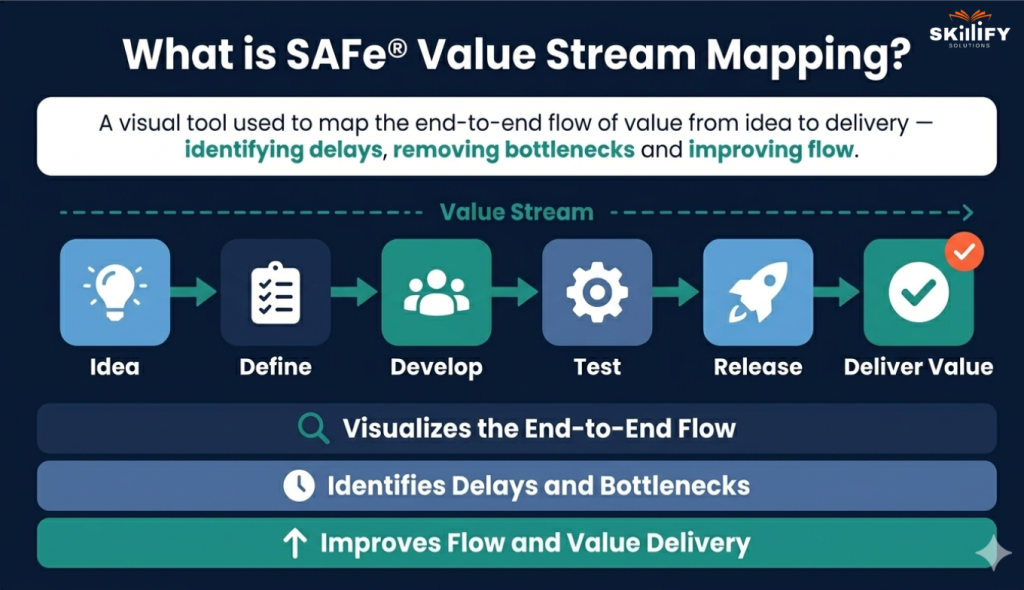
    SAFe® Value Stream Mapping (VSM) is a structured method used to visualize how value flows from idea to customer delivery across an organization. The Scaled Agile Framework (SAFe® 6.0), it helps enterprises identify delays, bottlenecks, handoffs, and inefficiencies in their processes. 

    At its core, VSM answers one simple question: how fast and smoothly does value move through your system?

    Instead of focusing only on teams, SAFe® VSM looks at the entire system level, from the delivery request. This makes it critical for large enterprises running multiple teams and Agile Release Trains (ARTs). 

    If you’re new to SAFe, starting with foundational courses like Leading SAFe® can help you understand how value streams connect with overall business agility and delivery systems.

    Value Stream Definition in SAFe® 6.0 

    In SAFe® 6.0, a value stream is defined as the series of steps an organization uses to deliver value to the customer, from concept to cash. 

    Untitled design 2026 04 27T213809.369 SAFe Value Stream Mapping: 2026 Guide to Process, Benefits, Tools, and Certification

    There are a few important characteristics: 

    • Starts with a trigger like a customer request, an idea, or a market demand 
    • Ends with a customer outcome like a product, service, or feature delivered 
    • Includes both value-adding steps and delays  
    • Cuts across teams, departments, and systems 

    This concept is rooted in core SAFe Lean Agile Principles, which focus on improving flow, reducing waste, and delivering value faster across the system.

    Types of Value Streams: Operational vs Development 

    Here’s a clear, practical comparison to understand how both value streams function in SAFe: 

    Aspect Operational Value Stream Development Value Stream 
    Focus Deliver value to customers Build and improve solutions 
    Trigger Customer request/order Idea/feature requirement 
    Outcome Service/product delivered Working solution/release 
    Teams Sales, ops, support Product, engineering, QA 
    Goal Smooth customer delivery Faster, continuous delivery 
    Metrics Delivery time, customer satisfaction Cycle time, throughput 

    Role of Value Streams in Lean Portfolio Management (LPM) 

    In SAFe Lean Portfolio Management, decisions are made at the business and investment level, not just at the team level. Value Stream Mapping (VSM) helps leaders see how value actually flows across the organization. 

    Why it matters: 

    • Improves flow: Finds delays, bottlenecks, and reduces cycle time  
    • Better investment decisions: Funds high-value streams, not assumptions  
    • Aligns strategy to execution: Connects business goals with delivery  
    • Enables faster outcomes: Speeds up idea to customer delivery 

    Why SAFe® Value Stream Mapping Matters

    SAFe® Value Stream Mapping (VSM) is about improving how fast and efficiently value reaches the customer. In large organizations using the Scaled Agile Framework, delays are often hidden across teams, approvals, and systems. VSM makes these gaps visible and actionable. 

    Why it matters: 

    • Reveals bottlenecks: Identifies delays, handoffs, and where work gets stuck  
    • Improves flow speed: Reduces cycle time and enables faster, consistent delivery  
    • Drives better decisions: Uses real data to prioritize high-impact improvements  
    • Aligns teams and business goals: Connects strategy with execution  
    • Boosts productivity: Eliminates waste and improves overall system performance 

    Deliver customer value faster by mastering prioritization with the SAFe Product Owner Product Manager certification now!

    How to Do SAFe® Value Stream Mapping 

    Value Stream Mapping in the Scaled Agile Framework helps visualize how work flows from idea to delivery, uncovering delays and inefficiencies to improve speed and value delivery. 

    Step 1: Identify Trigger and Customer Value 

    Identify what starts the process with the trigger and what value is delivered to the customer (outcome). This ensures clarity on purpose and aligns everyone on the end goal. Always define value from the customer’s perspective, not internal activities. 

    Step 2: Map Workflow, Delays, and Handoffs 

    Map all steps involved, including work, delays, and handoffs between teams. This gives a complete view of the flow and highlights inefficiencies. Most delays occur in the waiting time between steps, not the work itself. 

    Step 3: Measure Flow Metrics  

    Measure key metrics like cycle time, throughput, and work in progress (WIP) to understand performance. These help uncover inefficiencies and delays. Focus on improving end-to-end flow time, not just individual tasks. 

    Step 4: Identify Bottlenecks and Improve Flow 

    Analyze the flow to find where work slows down or gets stuck. These bottlenecks reduce efficiency and speed. Fix the biggest constraint first to create maximum improvement in flow. 

    Step 5: Align with Agile Release Train (ART) 

    Ensure teams are aligned through Agile Release Trains for smooth and continuous delivery. Proper alignment reduces delays and improves coordination, leading to faster and more predictable outcomes. 

    Lead Agile Release Trains effectively and align multiple teams with SAFe RTE certification training now!

    SAFe® Value Stream Mapping Example and Template  

    Understanding Value Stream Mapping becomes easier when you see it in action. In the Scaled Agile Framework, both examples and templates help teams visualize flow, identify delays, and standardize improvements across projects. 

    Development Value Stream Example 

    A development value stream shows how a feature moves from idea to delivery, helping teams identify delays and improve flow. Typically, the actual work takes less time than the total cycle, with most delays happening between steps. 

    Stage Activity Time Taken 
    Idea Requirement defined 1 day 
    Backlog Prioritization 1 day 
    Development Coding 3 days 
    Testing QA validation 2 days 
    Deployment Release 1 day 
    Wait Time Between steps 4-5 days 

    Reusable VSM Template for Teams 

    A reusable template standardizes how teams map value streams, making it easier to compare processes, spot inefficiencies, and track improvements over time.  

    It ensures everyone follows the same structure, reducing confusion and saving time. This consistency helps teams quickly identify delays, bottlenecks, and opportunities for optimizing flow. 

    Element Description 
    Trigger What starts the process 
    Steps Activities involved 
    Wait Time Delays between steps 
    Handoffs Team transitions 
    Metrics Cycle time, throughput, WIP 
    Outcome Final value delivered 

    To go beyond templates and apply this in real-world scenarios, professionals often combine this knowledge with courses like SAFe DevOps Practitioner. This focuses on execution and flow optimization across teams.

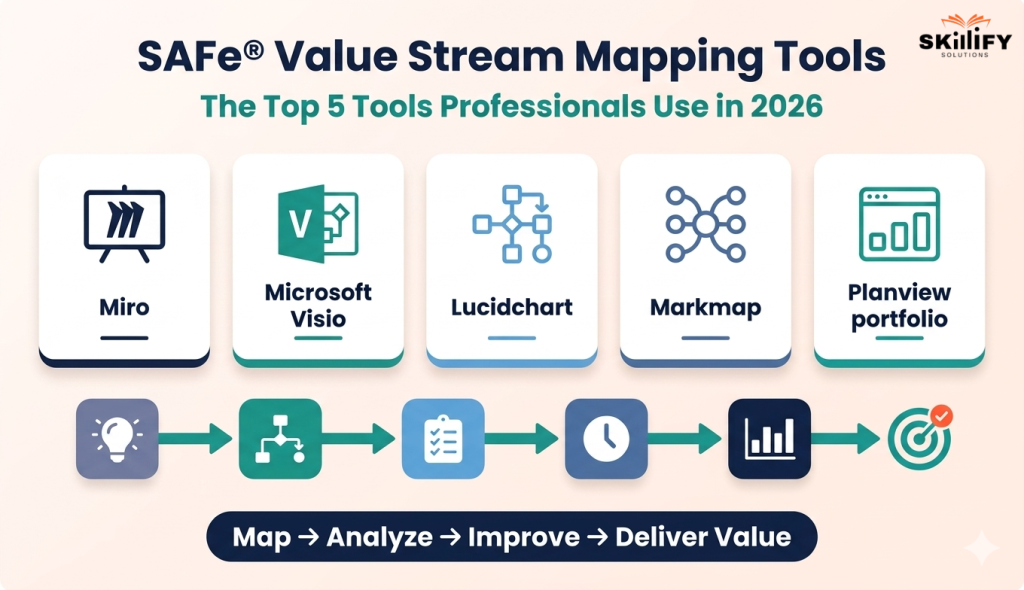
    SAFe® Value Stream Mapping Tools (2026) 

    In 2026, organizations use a mix of mapping and management tools to gain clarity, collaborate better, and track performance in real time. These tools help teams identify delays, streamline workflows, and deliver value faster across the system.

    SAFe® Value Stream Mapping Tools

    1. Miro 

    Miro is a visual collaboration tool used to create and share value stream maps in real time. It is widely used for remote workshops and brainstorming to visualize workflows. 

    Key Features 

    • Drag-and-drop VSM boards  
    • Real-time collaboration  
    • Ready-made templates  
    • Integrations with Jira, Slack  

    Pricing: Free plan available, with paid team and enterprise plans 

    2. Lucidchart 

    Lucidchart is a diagramming tool that helps teams visualize workflows and map value streams clearly. It focuses on process design and collaboration rather than full VSM management. 

    Key Features 

    • Interactive value stream maps  
    • Real-time collaboration  
    • Easy sharing and presentation  
    • Integrations with G Suite, Slack  

    Pricing: Free version available with paid individual and team plans 

    3. Microsoft Visio 

    Microsoft Visio is a structured diagramming tool used to create detailed process maps and value stream diagrams. It is ideal for organizations using Microsoft ecosystems. 

    Key Features 

    • Professional VSM diagrams  
    • Pre-built templates  
    • Microsoft 365 integration  
    • Data linking capabilities  

    Pricing: Paid tool and Enterprise licensing available 

    You can explore the Scaled Agile Framework Tools in detail to help organizations choose the right systems to manage and optimize value streams effectively.

    4. Jira Align 

    Jira Align is an enterprise SAFe® tool that helps organizations track and optimize value flow across teams and portfolios. It goes beyond mapping by providing real-time insights and alignment. 

    Key Features 

    • End-to-end value stream visibility  
    • Real-time flow metrics  
    • ART alignment  
    • Deep Jira integration  

    Pricing: Custom enterprise pricing 

    5. Asana 

    Asana is a work management tool that helps teams track workflows and monitor progress across tasks. It can support value stream mapping by visualizing stages and delays. 

    Key Features 

    • Task and workflow tracking  
    • Timeline and board views  
    • Team collaboration  
    • Integrations with Slack, Google tools  

    Pricing: Free plan available with paid premium plans 

    Value Stream Mapping vs Value Stream Management in SAFe® 

    In the Scaled Agile Framework, Value Stream Mapping (VSM) and Value Stream Management are closely related but serve different purposes.  

    Mapping focuses on visualizing the current workflow, while management focuses on continuously improving and optimizing that flow using data and tools. Both are essential for achieving faster and more efficient value delivery. 

    Aspect Value Stream Mapping (VSM) Value Stream Management 
    Purpose Visualize and understand workflow Monitor and optimize flow continuously 
    Focus Current state process Ongoing performance improvement 
    Approach One-time or periodic activity Continuous, data-driven process 
    Output Visual map of steps and delays Insights, metrics, and improvements 
    Tools Miro, Lucidchart, Visio Jira Align, VSM platforms 
    Data Usage Limited, mostly manual Real-time data and analytics 
    Goal Identify bottlenecks Improve flow efficiency over time 

    SAFe® Certification for Value Stream Mapping  

    In the Scaled Agile Framework, Value Stream expertise is closely tied to Lean Portfolio Management (LPM). LPM focuses on aligning strategy, funding, and execution around value streams, making it essential for leaders who want to improve flow and business outcomes at scale. 

    SAFe® Lean Portfolio Management (LPM) 

    The SAFe 6.0 Lean Portfolio Manager (LPM) certification equips professionals with the skills to connect business strategy with delivery execution. It teaches how to identify value streams, allocate funding effectively, and measure performance using flow-based metrics. 

    What you learn: 

    • Identifying and organizing value streams  
    • Funding products instead of projects  
    • Measuring flow like cycle time, throughput
    • Aligning teams with business goals  

    These decisions are guided by Lean thinking, which is why a deeper understanding of SAFe Lean Agile Principles becomes critical for leaders working at the portfolio level.

    Leading SAFe® (SAFe® Agilist Certification) 

    The Leading SAFe Certification is a foundational course that helps professionals understand how to implement SAFe, align teams, and improve value flow across the organization. It is ideal for leaders driving Agile transformation and working with value streams. 

    What you learn: 

    • Lean-Agile principles and leadership mindset  
    • Aligning teams and Agile Release Trains (ARTs)  
    • Value delivery from strategy to execution  
    • Lean Portfolio Management and flow optimization  

    Lead Agile transformation confidently and scale delivery across teams with Leading SAFe Certification!

    Conclusion 

    From the above blog, we can conclude that SAFe® Value Stream Mapping is a practical approach to solving one of the biggest challenges in organizations. It is a slow and inefficient delivery. In this blog, we covered how to map value streams, measure performance, identify bottlenecks, and use the right tools to improve flow. 

    The key takeaway is that most inefficiencies are hidden in plain sight, within delays, handoffs, and disconnected processes. By making these visible, teams can take focused action and improve continuously. 

    Certifications and structured frameworks like SAFe® further help in scaling these improvements across the organization. As businesses grow more complex in 2026, the ability to deliver value quickly and consistently becomes a major advantage. Value Stream Mapping is the first step toward achieving that.

    Frequently Asked Questions

    Q1: Is Value Stream Mapping the same as process mapping?

    No. Value Stream Mapping focuses on end-to-end value flow, including delays and wait time, while process mapping mainly shows steps and the sequence of tasks without a deep focus on flow efficiency.

    Q2: How often should value streams be reviewed in SAFe?

    Value streams should be reviewed regularly, typically every Program Increment (PI) or when there are major changes. Continuous review helps identify new bottlenecks and improve flow.

    Q3: What is flow time in SAFe® value stream metrics?

    Flow time is the total time taken for work to move from start to finish, including both active work and waiting time. It helps measure how fast value is delivered.

    Q4: Can value stream mapping work for non-IT organizations?

    Yes. Value Stream Mapping applies to any industry, including manufacturing, healthcare, and services. It helps improve flow and efficiency wherever work moves through a process.

    Q5: What SAFe® role is responsible for value stream management?

    Value stream management is primarily handled by Lean Portfolio Management (LPM) leaders, along with roles like Business Owners and Release Train Engineers. They ensure alignment, funding, and flow optimization across value streams.

  • PERT vs CPM: Key Differences, Formulas, Examples, and When to Use

    PERT vs CPM: Key Differences, Formulas, Examples, and When to Use

    PERT and CPM are two of the most widely used project management techniques to plan timelines, reduce delays, and bring control to execution. If you’ve ever struggled with projects going off track despite careful planning, the issue is usually not effort; it’s estimation.

    From practical experience, most teams either overestimate speed or underestimate risk, which leads to unrealistic timelines. This is exactly where PERT and CPM make a difference. 

    PERT helps you deal with uncertainty using multiple time estimates, while CPM helps you identify the critical path and manage execution with precision.

    In this blog, we’ll break down PERT vs CPM with formulas, real-world examples, and clear use cases, so you can move from guesswork to structured, reliable project planning. Read on to know more!

    Difference Between PERT and CPM 

    In project management, PERT and CPM are two essential scheduling techniques used to plan, track, and manage projects efficiently. While both help identify timelines and dependencies, they differ in how they handle time estimation, uncertainty, and cost control. 

    The table below gives a quick and clear comparison to understand the core differences between PERT and CPM. 

    Aspect PERT CPM 
    AbbreviationProgram Evaluation and Review Technique Critical Path Method 
    Time Model Probabilistic Deterministic 
    Orientation Event-oriented Activity-oriented 
    Best For Uncertain projects like R&D and  innovationPredictable projects like construction, manufacturing, and others 
    Cost Trade-off Not focused on cost Includes time–cost trade-off 
    Uncertainty High uncertainty handled Assumes low uncertainty 
    Network Focus Focus on events/milestones Focus on activities or tasks 

    What is PERT in Project Management 

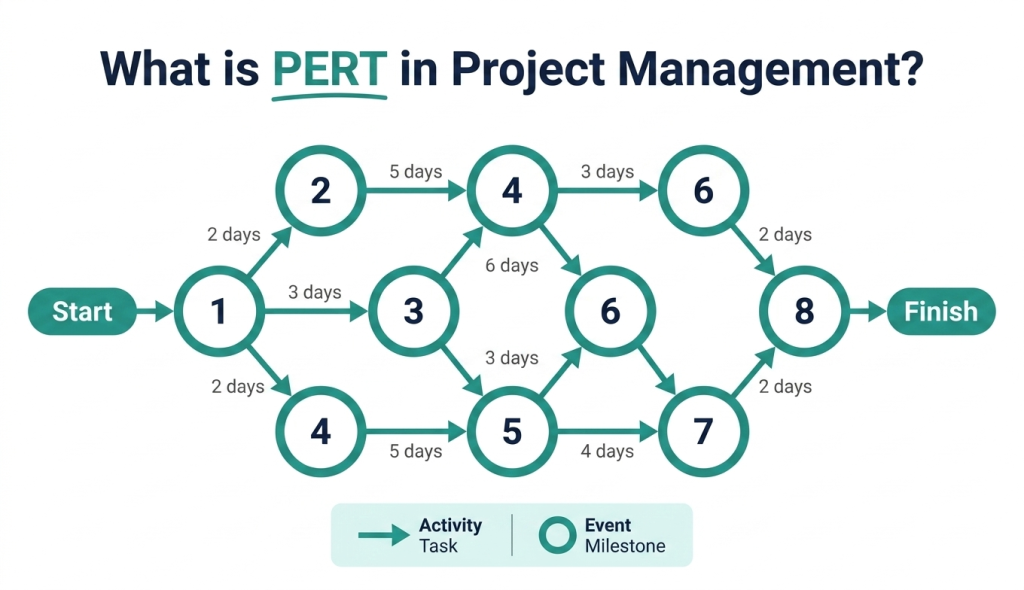
    Program Evaluation and Review Technique (PERT) is a project scheduling method used to plan tasks when time estimates are uncertain. It helps managers break a project into activities, estimate durations, and identify the sequence of tasks required to complete the project. 

    PERT is mainly used in projects where outcomes are not fixed, such as research, product development, or innovation-driven work. Instead of relying on a single time estimate, it uses multiple estimates to handle uncertainty more effectively. 

    In modern teams, learning PERT is often complemented with Agile and Scrum frameworks. You can learn it from Scrum Master Bootcamp, which focuses on iterative planning and faster execution.

    PERT in Project Management 

    Probabilistic Estimation Technique 

    PERT is called a probabilistic technique because it considers uncertainty in task durations. Instead of one fixed time, it uses three estimates: 

    • Optimistic time (O): Minimum possible time  
    • Most likely time (M): Realistic estimate  
    • Pessimistic time (P): Maximum possible time  

    This approach gives a more balanced and practical timeline, especially in complex or unpredictable projects. 

    PERT Formula with Example 

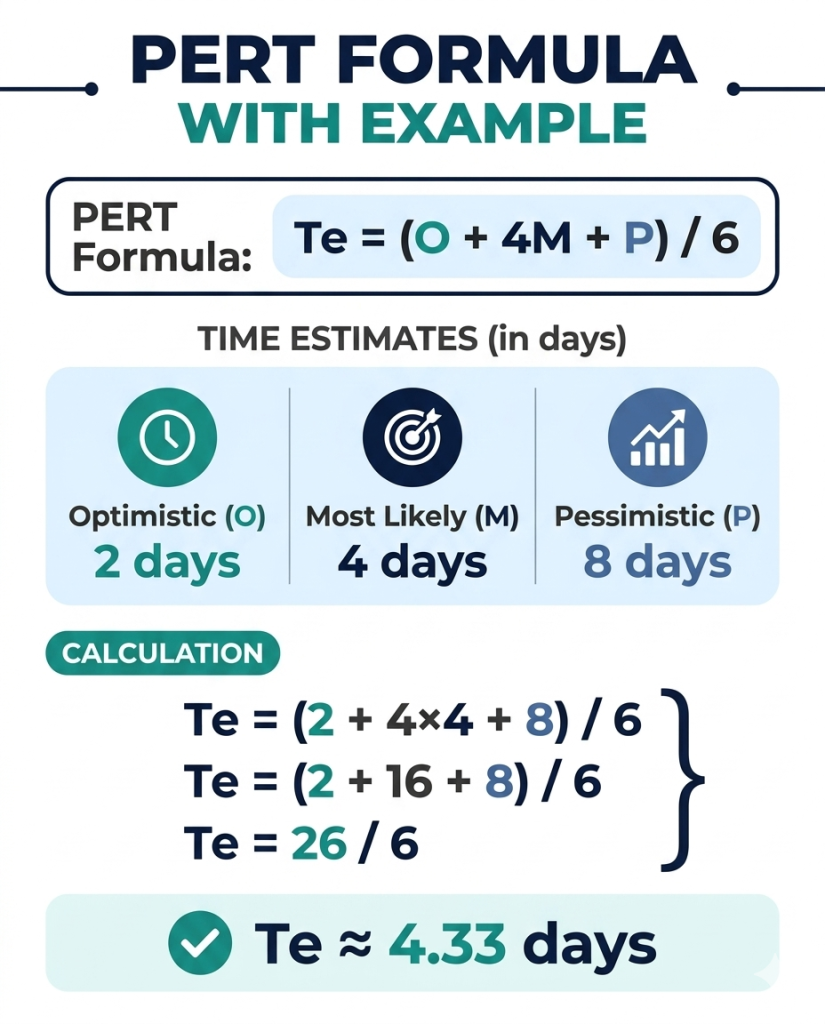
    Imagine you are managing a factory machine installation project. In the best case, the work can be completed in 5 days, under normal conditions it takes around 7 days, and in case of delays it may take up to 13 days. 

    Instead of relying on a single estimate, you use the PERT formula to calculate a more realistic timeline. 

    Using the formula Te = (O + 4M + P) / 6, we get:

    PERT Formula with Example 

    This means the expected project duration is around 7.7 days, giving a balanced estimate that accounts for uncertainty and possible delays.

    While PERT focuses on estimation in uncertain projects, modern teams often combine it with Agile Methodology in Project Management to adapt faster during execution.

    What is CPM?  

    Critical Path Method (CPM) is a project scheduling technique used to plan and control tasks with fixed and known durations. It helps identify the longest sequence of dependent activities (critical path) that determines the minimum time required to complete a project. 

    CPM is widely used in projects where activities are predictable, such as construction, manufacturing, and infrastructure projects. It focuses on time optimization and cost control, making it useful for managing deadlines efficiently. 

    Deterministic Scheduling Method 

    CPM is called a deterministic method because it assumes that activity durations are known and fixed. This makes CPM suitable for projects where tasks are repetitive and timelines are well defined.   

    • Each task has a single time estimate  
    • No uncertainty is considered  
    • Focus is on accurate planning and scheduling  

    Ready to stop guessing timelines? Master project planning techniques that actually work with our Scrum Master Bootcamp!

    Forward Pass and Backward Pass in CPM 

    These are two key calculations used to determine the project schedule: 

    Forward Pass: Calculates the earliest start (ES) and earliest finish (EF) for each activity. It moves from the start to the end of the project.  

    Backward Pass: Calculates the latest start (LS) and latest finish (LF) without delaying the project.  It moves from the end to the beginning. 

    Float (Slack) in CPM with Example 

    Float (or slack) is the amount of time a task can be delayed without affecting the overall project timeline. 

    Formula: Float = LS – ES (or LF – EF) 

    Example: 

    Task A: ES = 2 days, LS = 4 days  Float = 4 – 2 = 2 days 

    This means Task A can be delayed by 2 days without delaying the project. Tasks with zero float form the critical path, and any delay in these tasks will delay the entire project. 

    Concepts like critical path and float are key parts of SAFe® 6.0 Scrum Master (SSM) programs. These are widely used in industries like construction and operations.

    When to Use PERT vs CPM: A Decision Guide 

    If the project involves uncertainty and evolving timelines, PERT is more suitable. If tasks and durations are clearly defined, CPM works better for planning and control. 

    Use cases of PERT 

    PERT is ideal when you need multiple time estimates, like optimistic, most likely, and pessimistic, to handle uncertainty.  Use PERT when the project has uncertain timelines and high variability: 

    • Research and Development (R&D) projects  
    • New product development or innovation projects  
    • Complex, non-repetitive projects  
    • Projects where the task duration is not clearly known  
    • Large-scale planning where estimation is required  

    Use cases of CPM  

    CPM works best when activity durations are known, and a deterministic (fixed) approach can be applied. Use CPM when the project has fixed timelines and predictable tasks: 

    • Construction and infrastructure projects  
    • Manufacturing and production processes  
    • Routine or repetitive projects  
    • Projects with clearly defined activities and durations  
    • Projects where cost optimization and scheduling efficiency are important. 

    In practice, many teams don’t strictly choose one method; they combine structured planning with Agile execution models, often led by roles like a Scrum Master. If you’re exploring this role, here’s a simple breakdown of What is a Scrum Master. 

    Hybrid use in Modern Project Management 

    Modern project management combines both techniques because they are complementary tools for planning, scheduling, and control.  In real-world projects, PERT and CPM are often used together: 

    • PERT is used during the planning phase to estimate uncertain timelines  
    • CPM is used during the execution phase to track progress and control cost  
    • Both help identify the critical path and task dependencies  

    Many organizations follow a hybrid approach, structured planning with PERT/CPM, and execution through Scrum frameworks led by Certified Scrum Masters (CSM).

    Real-World Examples of PERT and CPM 

    PERT and CPM are applied in very different real-world scenarios based on how predictable the project is. PERT is used when activities are uncertain and exploratory, while CPM is used when tasks are clearly defined and sequential. This makes PERT more common in innovation-driven environments and CPM more relevant in execution-heavy industries. 

    Over time, project management has evolved. While PERT and CPM still play a role in planning and scheduling, modern software projects have shifted towards Agile methods, which focus more on flexibility and continuous delivery rather than fixed timelines. 

    PERT Example  

    PERT is widely used in projects where task durations are uncertain and cannot be predicted accurately in advance. It was originally developed for the U.S. Navy’s Polaris missile program and later applied in aerospace and research-driven projects, including NASA missions. 

    These projects involve multiple complex activities where timelines vary, making probabilistic estimation essential. 

    • Developed for the Polaris missile program of the U.S. Navy
    • Used in aerospace and NASA projects  
    • Suitable for R&D and innovation-driven projects  
    • Handles uncertain and variable task durations  
    • Uses optimistic, most likely, and pessimistic estimates  
    • Example: space missions, experimental product development 

    Build job-ready project management skills and take control of timelines and execution with our SAFe 6.0 Lean Portfolio Manager (LPM) certification!

    CPM Example  

    CPM is widely used in projects where activities are well-defined and timelines are predictable. It is especially effective in construction and infrastructure projects, where tasks follow a fixed sequence and delays can directly impact the overall completion time. 

    CPM helps identify the critical path, ensuring that key activities are completed on schedule while optimizing time and cost. 

    • Used in construction and civil engineering projects  
    • Suitable for projects with fixed and known timelines  
    • Identifies the critical path, the longest sequence of tasks
    • Helps in time and cost optimization, like crashing
    • Activities follow a clear sequence, like foundation to  structure and finishing)  
    • Example: building construction, highways, plant setup 

    Why Agile Is Replacing PERT/CPM in Software Projects 

    Traditional methods like PERT and CPM rely on fixed planning and predefined timelines, which work well in stable environments. However, software projects are highly dynamic, where requirements change frequently, and new updates are introduced continuously. This makes rigid scheduling methods less effective. 

    This shift has also increased demand for Agile roles across industries. It is important to understand the evolving Project Manager Job Market and how these skills impact career growth.

    Agile replaced these approaches by focusing on flexibility, iteration, and continuous improvement. Instead of planning everything up front, Agile breaks work into small cycles (sprints), allowing teams to adapt quickly and deliver faster. 

    • Handles changing requirements easily  
    • Uses short development cycles (sprints)  
    • Focuses on continuous feedback and improvement  
    • Prioritizes working software over fixed plans  
    • Better suited for fast-moving, evolving projects 

    This shift has made roles like Scrum Master and Product Owner more important. It has also driven demand for certifications like Product Management with AI Bootcamp lately. 

    Limitations of PERT and CPM 

    While PERT and CPM are powerful scheduling tools, they have limitations depending on the project environment. PERT struggles with estimation accuracy in uncertain scenarios, while CPM becomes less effective when projects are dynamic and frequently changing. 

    Challenges of probabilistic estimation in PERT 

    PERT is useful for handling uncertainty, but its biggest limitation is that it depends heavily on estimated values. The optimistic, most likely, and pessimistic times are based on assumptions and expert judgment, which may not always be accurate. 

    The three-time estimates are often based on judgment, which can be biased or inaccurate. This makes the final timeline unreliable if the inputs are wrong. Also, in large projects, creating and managing multiple estimates for every activity becomes complex, time-consuming, and difficult to maintain. 

    Limitations of CPM in dynamic environments 

    CPM’s major limitation is its lack of flexibility in changing environments. CPM, on the other hand, works best when task durations are fixed, but this becomes a limitation in dynamic projects. It assumes stable conditions and does not handle changes well during execution.  

    If delays or changes occur, the entire schedule needs to be recalculated. This makes CPM less suitable for projects where requirements evolve frequently or timelines are uncertain. 

    Learn from a Certified SAFe 6.0 Teams Practitioner on how top teams manage uncertainty and deliver projects faster and more efficiently!

    PERT vs CPM vs Agile: Which is Better in 2026? 

    In 2026, there is no single best method; the right choice depends on the type of project. PERT is useful when timelines are uncertain, CPM works best for structured and predictable execution, while Agile dominates in environments where speed, flexibility, and continuous change are critical.  

    The table below gives a clear comparison.  

            Aspect     PERT   CPM               Agile 
                    Approach Probabilistic (estimation-based)Deterministic (fixed planning) Iterative and adaptive 
    Best For R&D, innovation projects Construction, manufacturingSoftware, startups, dynamic projects 
    Flexibility Medium LowHigh
    Time Estimation Uses 3 estimates (O, M, P) Single fixed estimateNo fixed estimate, evolves over time 
    Change Handling Limited Very limitedExcellent 
    Focus Planning under uncertainty Time and cost optimizationContinuous delivery & improvement
    Project Type Complex, uncertain Structured, predictableFast-changing, evolving 
    Modern Relevance Used in planning-heavy projects Used in execution-heavy industriesWidely used in modern tech projects 

    Unlike traditional methods, Agile project management focuses on continuous delivery and adaptability. Learning from the SAFe 6.0 Agile Product Manager Certification makes it highly relevant in modern software and startup environments.

    Conclusion  

     PERT and CPM are powerful tools that help bring clarity to project planning. The key difference is simple. PERT is used when timelines are uncertain, while CPM works best when tasks and durations are clearly defined.

    In real-world scenarios, both techniques can complement each other. PERT for planning and estimation, CPM for execution and control. And for dynamic environments like software, Agile adds the flexibility that traditional methods lack.

    The goal is not to follow one method blindly, but to use the right approach at the right stage. When used correctly, these techniques can help you plan better, reduce delays, and deliver projects more efficiently.

    Master both traditional and Agile methods to handle any project with confidence with our Product Management Bootcamp!

    Frequently Asked Questions

    1. Which is more accurate for time estimation: PERT or CPM?

    PERT is more accurate when there is uncertainty, as it uses three time estimates. CPM is accurate only when task durations are fixed and predictable.

    2. Can PERT and CPM be used in Agile project management?

    Yes, but in a limited way. PERT can help in early estimation, and CPM can support planning, but Agile mainly relies on iterative and flexible scheduling.

    3. How does float differ in PERT and CPM usage?

    Float is mainly used in CPM to measure task flexibility. In PERT, the focus is more on time estimation rather than detailed float calculation.

    4. Why is CPM preferred in construction projects over PERT?

    CPM is preferred because construction projects have fixed tasks and timelines. It helps in managing schedules and controlling costs effectively.

  • Scrum Master Jobs in 2026: Skills, Salary & How to Get Hired

    Scrum Master Jobs in 2026: Skills, Salary & How to Get Hired

    Introduction

    We all have seen a pattern lately. More people are becoming Scrum Masters, but fewer are getting hired. Do you know the reason for this? It is because the role has evolved in 2026. 

    Now, the trend has changed. Companies don’t just want someone who can run stand-ups or manage sprints. They want someone who can handle teams, align stakeholders, and actually improve delivery. At the same time, the market is growing fast, and Agile adoption is expanding across industries.

    So yes, the opportunity is real, but so is the competition.

    This blog will break down everything you need to know about Scrum Master Jobs. All from demand, salary, skills, certifications, and most importantly, what actually gets you hired. If you’re planning to enter this field or grow in it, this will give you a clear, practical direction. Read on to know more!

    Are Scrum Master Jobs Still in Demand in 2026? 

    Yes, Scrum Master jobs are still very much in demand in 2026, and in many cases, the demand is actually growing. As companies continue to move towards Agile ways of working, the need for someone who can manage teams, remove blockers, and ensure smooth delivery has become critical.  

    Earlier, Agile was largely limited to tech companies, but today it has expanded across industries such as finance, healthcare, retail, and even traditional businesses. This shift has made the Scrum Master a key role in helping teams stay aligned, productive, and fast-moving. 

    The demand is being driven by: 

    • More companies are adopting Agile across industries 
    • The need for faster decision-making and product releases  
    • Growing complexity in managing cross-functional teams  

    In fact, job growth for Scrum Masters is projected to grow by around 24% by 2026, which is significantly higher than many other roles. If you’re exploring structured ways to get started, programs like a Scrum Master Bootcamp can help you move faster with guided learning and real-world scenarios.

    Job Market Demand and Competition for Scrum Masters 

    The demand for Scrum Masters in 2026 remains strong, as it has been over the last few years. But in 2026, competition has increased, especially at the entry level. 

    • Scrum Master roles are growing at 24% by 2026, much faster than many other jobs  
    • Agile adoption is expanding beyond tech into finance, healthcare, and startups  
    • More candidates are entering through certifications, and thus, the beginner roles are crowded  
    • Companies now prefer practical experience over just certifications  
    • There’s still a shortage of experienced Scrum Masters, which creates a high-paying opportunity

    Learn Scrum the right way with real projects, not just theory, with our Scrum Master Bootcamp today!

    Scrum Master Salary in 2026: Complete Breakdown 

    As companies rely more on Agile teams for faster delivery, they are willing to pay a premium for Scrum Masters who can improve team performance and drive results. 

    Entry-Level Scrum Master Salary 

    Entry-level roles require basic Agile knowledge and certification, such as Scrum Master Bootcamps. However, hands-on project exposure can significantly improve offers. 

    Region Salary Range in 2026
    USA $86,000 – $99,000 
    UK£36,300 – £41,500
    India ₹ 8,75,200 – ₹ 10,99,000
    Canada CA$69k – CA$121k
    Australia A$79k – A$160k

    Mid-Level and Experienced Salary Range 

    Experienced professionals handling multiple teams or Agile transformation often move into higher-paying leadership roles. 

    This is why Scrum Master is often considered one of the best Non-technical Jobs in IT for professionals transitioning from operations, support, or management roles.

    Experience Level USUKIndiaCanada Australia
    Mid-Level  $111k – $120k £34k – £56k₹10L – ₹20LCA$69k – CA$92kA$79k – A$120k
    Experienced$128k+£53k – £85k₹811k – ₹3MCA$85k – CA$130kA$123k – A$150k

    Top Skills You Need to Become a Scrum Master in 2026 

    The role of a Scrum Master in 2026 is no longer limited to running stand-ups or managing sprints. It has evolved into a mix of technology, leadership, and business impact. 

    Today’s Scrum Master operates at the intersection of people, processes, and tools. It balances team coaching with data-driven decision-making and AI-enabled workflows 

    Agile Tools and AI-Driven Workflow Skills 

    In 2026, being comfortable with Agile tools and AI is a core requirement. Tools like Jira, Trello, and ClickUp help manage backlogs, track sprints, and improve team visibility  

    Data-driven decision-making is one of the important metrics you must know. Scrum Masters are expected to analyze metrics like sprint velocity, cycle time, and team performance  

    AI integration and tools are now used for:  

    • Predicting sprint outcomes  
    • Automating repetitive tasks  
    • Identifying risks and bottlenecks  

    Building these skills on your own can take time. That is why many professionals choose hands-on programs like the Scrum Master Bootcamp that focus on real projects, tools, and team scenarios.

    Communication and Stakeholder Management Skills 

    While tools matter, the real differentiator is how well you handle people. 

    • Ability to align developers, product teams, and leadership  
    • Managing expectations across business, tech, and leadership teams  
    • Understanding team dynamics, resolving conflicts, and building trust  
    • Running effective meetings, removing blockers, and keeping teams focused 

    CSM vs SSMvs SAFe®: Which Scrum Certification is Best in 2026? 

    Choosing the right Scrum certification in 2026 depends on your experience level and career goals. Certifications help you get shortlisted, but skills and real-world experience ultimately decide hiring. Let’s find out the difference:  

    Best Certification Based on Your Experience Level 

    Certification Best For Difficulty Level Key Benefit 
    Scrum Master Bootcamp with AI Beginners Easy Quick entry into Scrum roles 
    SAFe® 6.0 Scrum Master CertificationBeginners to Intermediate Moderate         Acquire practical implementation                      
    Scaled Agile Framework (SAFe®) CertificationExperienced Professionals Moderate to High Enterprise-level Agile expertise 

    Which Certification Helps You Get Hired Faster 

    When it comes to getting hired quickly, CSM usually has an advantage because it is widely recognized and commonly listed in job requirements, especially for entry-level roles. It helps candidates get shortlisted faster due to their popularity and accessibility. 

    However, a Certified Scrum Master can stand out in interviews, as it demonstrates a stronger conceptual understanding of Scrum. Some companies prefer them because of their exam-based validation. 

    For larger organizations and higher-level roles, SAFe® certification can significantly improve your chances, as companies working at scale actively look for professionals who understand Agile frameworks beyond a single team. To know more, read our guide on What is SAFe® certification in detail and opt for the best roles in 2026. 

    How to Become a Scrum Master in 2026 

    Becoming a Scrum Master in 2026 does require the right focus. Here are the 5 core things you need to get right:

    1. Build Strong Agile and Scrum Fundamentals and understand how Scrum works in real teams. Start with sprints, stand-ups, backlog, and retrospectives.
    2. Gain Practical Experience and work on real or mock projects to show you can apply Scrum, not just explain it.
    3. Get a Relevant Certification through SAFe® Training Programs that can help you get shortlisted, but they should support your practical knowledge.
    4. Developing communication and Team Handling Skills to manage people, resolve conflicts, and align teams is critical.
    5. Use tools like Jira, show measurable impact in your resume, and apply smartly, even through related roles if needed.

    If you want a more detailed explanation, it’s worth exploring a complete guide on How to Become a Scrum Master, where each stage is broken down more clearly. This can help you understand what to learn first, how to choose the right certification, how to gain practical experience, what tools to focus on, and how to apply for roles with more confidence.

    Step into enterprise Agile roles with practical SAFe® Courses and enhance your skills now!

    How to Build a Strong Scrum Master Resume in 2026 

    Resume and LinkedIn Optimization Tips 

    Your resume and LinkedIn should clearly reflect your Scrum expertise and achievements in a simple, result-driven way. 

    • Use metrics and insights to prove results  
    • Words like facilitated, implemented, led, and improved make your profile more powerful  
    • Align your resume with the job description to pass ATS filters  
    • Mention team size, tools used, and problems solved  
    • Instead of just communication, show where you used it in real scenarios  
    • Use simple formatting and keep clear headings

    Keywords Recruiters Are Looking for in 2026 

    Recruiters and ATS systems rely heavily on keywords to shortlist candidates. If your resume doesn’t include them, it may never be seen. 

    Core Scrum Keywords 

    • Scrum, Agile Methodologies, Kanban  
    • Sprint Planning, Daily Standup, Retrospective  
    • Backlog Refinement, User Stories, Product Backlog  

    Tools and Technical Keywords 

    • Jira, Confluence, Azure DevOps, Trello  
    • Agile Metrics, Velocity Tracking, Burndown Charts  

    Skills and Responsibilities Keywords 

    • Team Facilitation, Stakeholder Management  
    • Impediment Removal, Agile Coaching  
    • Cross-functional Collaboration, Risk Management 

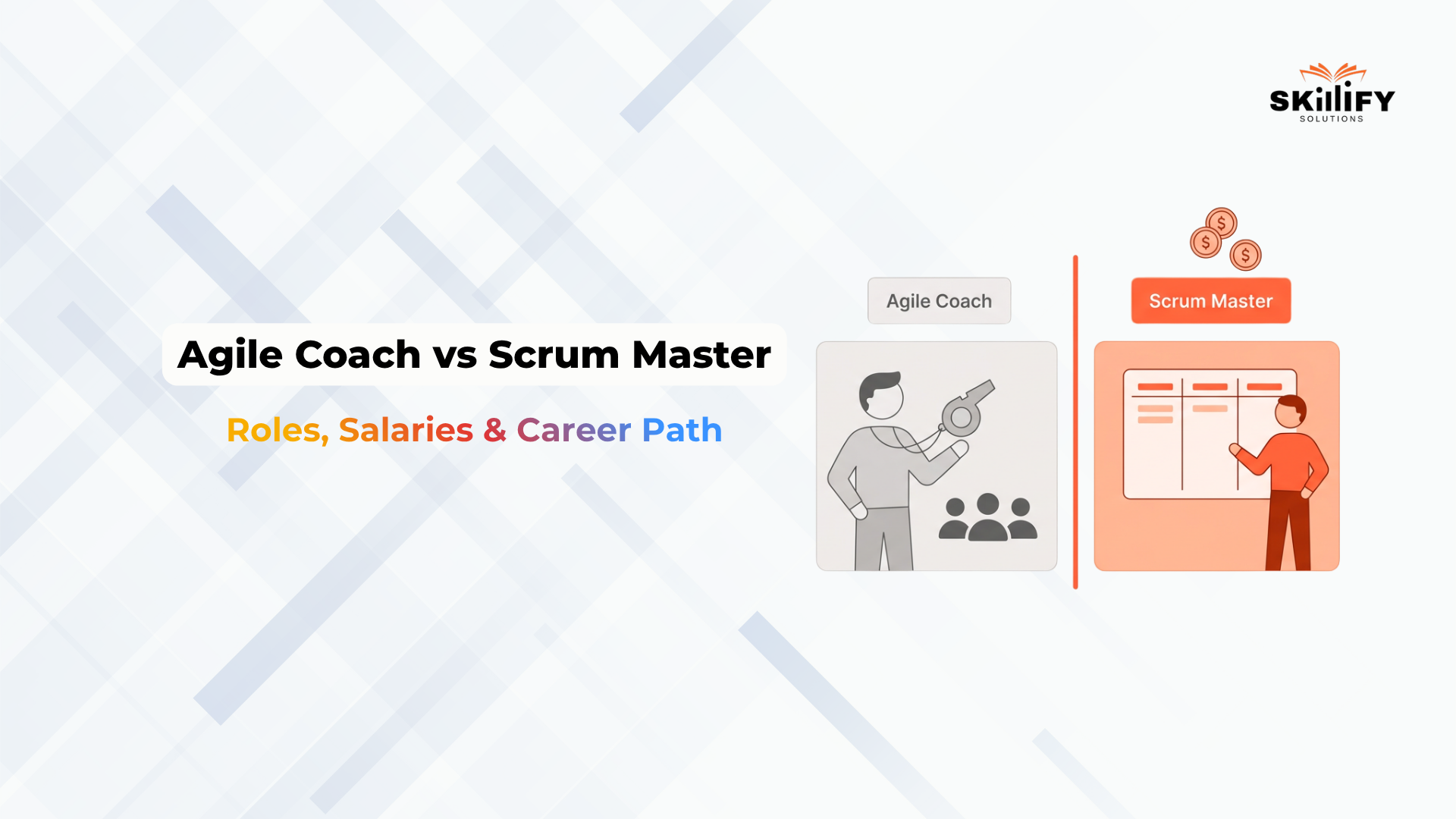
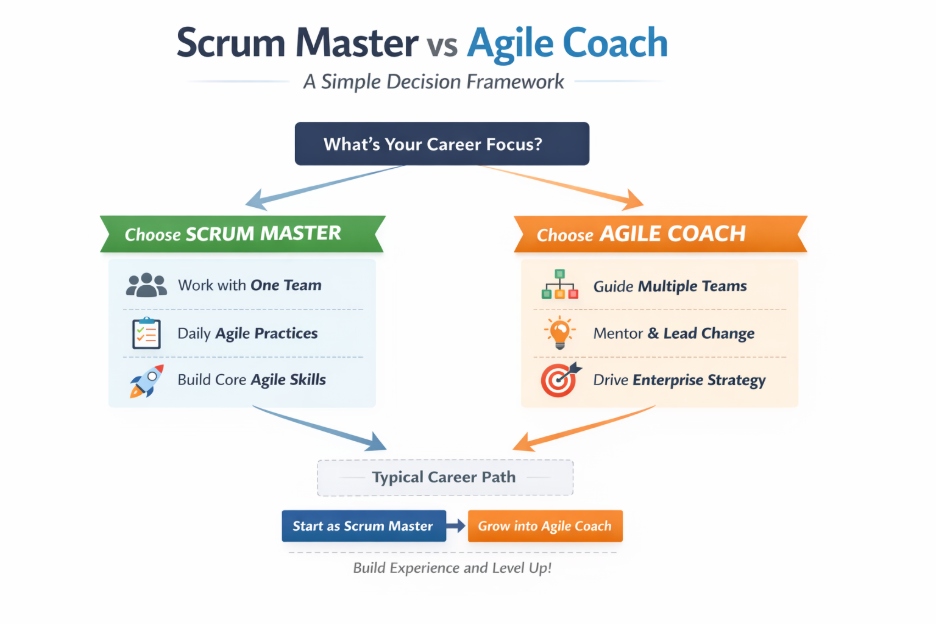
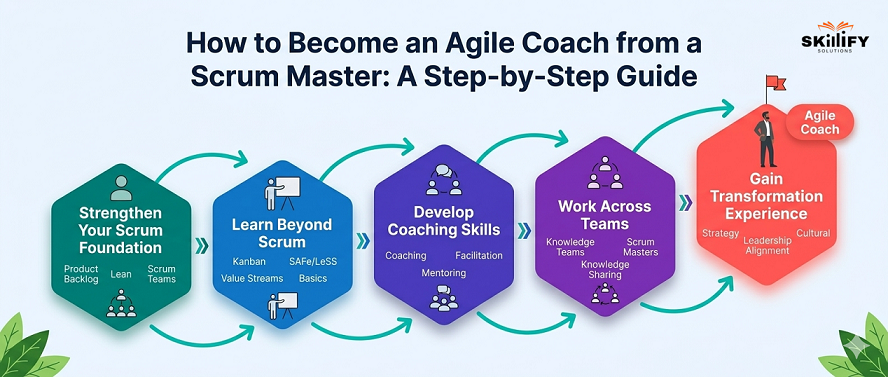
    With experience, many Scrum Masters move into higher roles like Agile Coach. If you’re exploring this path, understanding the difference between an Agile Coach vs Scrum Mastercan help you plan your growth better.

    Common Mistakes That Stop You from Getting a Scrum Master Job 

    Many candidates struggle to land a Scrum Master role. This is not because of a lack of demand, but because of avoidable mistakes in approach, skills, and positioning. In 2026, companies are hiring people who can actually lead teams and deliver outcomes. 

    scrum master jobs

    Here are the most common mistakes that hold candidates back: 

    Relying only on certification: Many candidates believe getting a certification is enough, but companies now expect practical experience and real-world application.  

    Fix: Show projects, internships, or real Agile exposure.  

    Waiting for the job title to gain experience: A common mistake is thinking you can only act as a Scrum Master after getting the role. 

    Fix: Start practicing Scrum in your current role. You can run meetings, manage tasks, or help teams improve. 

    Not understanding the real role of a Scrum Master: Many candidates treat it like a project manager or assistant role, which is incorrect.  

    Fix: Focus on being a facilitator and coach, not someone who controls or executes tasks.  

    Lack of communication and stakeholder skills: Technical knowledge alone isn’t enough; most failures happen due to poor communication and misalignment. 

    Fix: Build skills in conflict resolution, team alignment, and stakeholder handling.  

    Not showing a measurable impact in the resume: Generic resumes with no numbers or outcomes fail to stand out. 

    Fix: Add results like “improved sprint delivery by 20%” instead of listing responsibilities.  

    Trying to do everything instead of empowering the team: Acting as the team’s problem-solver or assistant reduces team ownership and shows a poor understanding of Scrum.  

    Fix: Guide the team to solve problems, don’t solve everything yourself.  

    Ignoring the Agile mindset and focusing only on the process: Following rituals like stand-ups and sprints without understanding Agile principles leads to poor performance. 

    Fix: Focus on outcomes like team efficiency, collaboration, and continuous improvement. 

    Conclusion 

     Scrum Master roles in 2026 offer strong demand, good salaries, and long-term growth. But the market is no longer about just certifications. Companies are looking for professionals who can manage teams, solve problems, and deliver real results. 

    If you focus on building practical experience, improving communication skills, and understanding how Agile works in real scenarios, you can stand out easily. 

    You can start with small steps, work on real projects, and keep learning continuously. The path is clear, but execution matters the most. If you stay consistent and focused, becoming a successful Scrum Master is completely achievable.

    Bridge the gap between certification and real Scrum experience today with our Scrum Master Bootcamp training!

    Frequently Asked Questions

    1. Why am I not getting Scrum Master interview calls even after certification?

    Most companies look beyond certification. If your resume lacks real project experience, measurable impact, or relevant keywords, it becomes hard to get shortlisted. Focus on showing practical work, not just certificates.

    2. Do companies hire Scrum Masters without a technical background in 2026?

    Yes, many companies hire non-technical professionals as Scrum Masters. The role focuses more on team management, communication, and Agile processes rather than coding skills.

    3. Is AI reducing Scrum Master job opportunities in 2026?

    No, AI is not reducing demand. Instead, it is changing the role by automating repetitive tasks and allowing Scrum Masters to focus more on strategy, team performance, and decision-making.

    4. Can AI replace Scrum Masters completely in the future?

    AI cannot fully replace Scrum Masters because the role involves human skills like leadership, conflict resolution, and team motivation, which require emotional intelligence.

    5. What new AI-related skills should Scrum Masters learn?

    Scrum Masters should learn how to use AI tools for data analysis, sprint prediction, workflow automation, and performance tracking to improve team efficiency.

  • Agile Coach vs Scrum Master: Key Differences, Salaries, and Which Career Path to Choose in 2026

    Agile Coach vs Scrum Master: Key Differences, Salaries, and Which Career Path to Choose in 2026

    Firstly, we have a question for you. If you want to start a career or change your job role today, would your work be more like that of a Scrum Master or an Agile Coach? 

    Most people can’t answer that clearly. Because in reality, many Scrum Masters are already doing coaching work, but without the scope, authority, or salary of an Agile Coach. And many who aim for Agile Coach roles underestimate how different the responsibility actually is. 

    The gap between the two roles is not just about experience or certification. It’s about how you think, what problems you solve, and the level at which you operate. 

    I’ve seen people jump titles without growing into the role and struggling. I’ve also seen people quietly evolve into Agile Coaches and completely change their career trajectory. 

    In this blog, we’ll cut through the confusion between Agile Coach vs Scrum Master, with clear differences, real salary insights for 2026, and a practical path to move forward. 

    What is a Scrum Master: Role, Responsibilities and Day-to-day Work 

    A Scrum Master is the person responsible for making sure a team follows Agile and Scrum practices properly. You can think of them as a team-level coach who helps the team work better, removes blockers, and stays productive.  

    Their main goal is simple. It is to help the team deliver work smoothly without distractions. A Scrum Master works closely with one team, focusing on improving how that team performs every day.   

    Let’s see a day in the Life of a Scrum Master below:  

    1. 9:30 AM: Joins daily stand-up, ensures everyone is aligned 
    2. 11:00 AM: Works with a developer to resolve a blocker 
    3. 1:00 PM: Syncs with Product Owner on sprint priorities 
    4. 3:00 PM: Coaches team on improving sprint performance 
    5. 5:00 PM: Prepares for retrospective and tracks improvements 

    If you’re planning to start your journey as a Scrum Master, structured learning can make a big difference. Programs like the Scrum Master Bootcamp are designed to give you practical, job-ready skills from day one.

    What is an Agile Coach? Role, Responsibilities, and Daily Work 

    An Agile Coach works at a broader level compared to a Scrum Master. Instead of focusing on just one team, they help multiple teams and the entire organization adopt Agile. 

    You can think of them as a strategy-level guide who drives Agile transformation across the company. Their main goal is to make the whole organization more Agile, without focusing on only one particular team.  Unlike Scrum Masters, Agile Coaches work across teams and leadership to create long-term changes.  

    Let’s see a day in the Life of an Agile Coach below:    

    1. 10:00 AM – Meets leadership to align Agile strategy 
    2. 12:00 PM – Runs a workshop on Agile practices 
    3. 2:00 PM – Mentors Scrum Masters across teams 
    4. 4:00 PM – Reviews organizational bottleneck 
    5. 6:00 PM – Plans improvements for Agile transformation 

    Agile Coach vs Scrum Master: Key Differences Explained 

    While both roles are part of the Agile ecosystem, their scope, impact, and level of influence are very different. The biggest difference is simple. A Scrum Master focuses on one team, while an Agile Coach works across the entire organization. Here’s a clear side-by-side comparison: 

    Factor Scrum Master Agile Coach 
    Scope Works with one team Works across teams and the entire organization 
    Authority Level Limited to team-level influence Influences leadership and enterprise decisions 
    Planning Horizon Short-termLong-term organizational transformation 
    Coaching Focus Team productivity and Scrum practices Culture, mindset, and Agile adoption 
    Salary Range (2026) ~$100K–$110K  ~$113K–$122K  
    Certifications Scrum Master Bootcamp with AIICP-ACC, SPC, CEC 
    Career Path Entry to a mid-level Agile role Senior or leadership-level role 

    Where the Two Roles Overlap and Where They Don’t

    Even though they have different roles, there is some overlap in what they do. 

    Where They Overlap 

    • Both promote Agile principles and best practices  
    • Both act as coaches and facilitators  
    • Both help teams become more efficient and self-organized  
    • Both aim to improve delivery and team performance  

    Where They Don’t 

    • Scrum Masters work inside a team, Agile Coaches work across teams, and leadership  
    • Scrum Masters focus on daily execution, Agile Coaches focus on long-term transformation  
    • Scrum Masters follow the Scrum framework; however, Agile Coaches use multiple frameworks like Scrum, Kanban, SAFe®, and others.  
    • Agile Coaches often mentor Scrum Masters, not the other way around 

    Learn, apply, and grow with structured SAFe® courses and build your future!

    Agile Coach vs Scrum Master Salary in 2026 

    Agile Coach and Scrum Master salaries differ mainly due to their level of responsibility and impact. While Scrum Masters focus on improving team performance, Agile Coaches work at a broader level, driving change across the entire organization.  

    As a result, Agile Coaches typically earn higher salaries, especially as experience and leadership involvement increase. Here’s a quick comparison of their salaries in 2026: 

    Role Average Salary Mid Range Lead Roles
    Scrum Master $74K – $110K $99K – $143K $160K+ 
    Agile Coach $99K – $110K $104K – $118K $190K+ 

    Scrum Master vs Agile Coach: Which Career is Right for You? 

    Choosing between a Scrum Master and an Agile Coach depends on your experience, career goals, and the kind of impact you want to create. While both roles are part of the Agile ecosystem, they operate at very different levels, and the right choice comes down to what stage you are in your career. 

    image 22 Agile Coach vs Scrum Master: Key Differences, Salaries, and Which Career Path to Choose in 2026

    When to Choose a Scrum Master? 

    If you enjoy working closely with a single team and solving day-to-day challenges, the Scrum Master role is the right fit. It focuses on improving team efficiency, running Agile ceremonies, and ensuring smooth delivery. This role is ideal for professionals who like structured environments and want to build a strong foundation in Agile practices. 

    When to Choose an Agile Coach? 

    If you are more interested in mentoring, influencing leadership, and driving change across multiple teams, the Agile Coach role is a better choice. It requires a broader perspective, where the focus is not just on execution but on transforming how the entire organization works. This role suits professionals who enjoy strategy, coaching, and long-term impact. 

    Not every Agile career moves towards coaching. Some choose Product Owner or Product Management roles based on their interest in business and customer outcomes. Structured programs like Product Management with AI Bootcamp can help you get started.

    How to Become an Agile Coach from a Scrum Master: A Step-by-step Guide 

    Transitioning from a Scrum Master to an Agile Coach means moving from team execution to organization-level impact. Here’s a simplified path to help you make that shift: 

    agile coach vs scrum master

    Step 1: Strengthen Your Scrum Foundation 

    Go beyond just running ceremonies and focus on improving team performance, resolving conflicts, and enabling self-organization.
    Tip: Instead of just facilitating stand-ups, start identifying patterns (like repeated blockers) and help the team fix root causes. 

    Step 2: Learn Beyond Scrum 

    Agile Coaches are not limited to Scrum; they understand multiple frameworks like Kanban, Lean, and SAFe®. As you move beyond Scrum, learning frameworks like SAFe® become important, especially for large organizations. 

    Courses like Leading SAFe®, SAFe® Agile product management, or SAFe® Scrum Master training by Skillify Solutions can help you understand how Agile works at scale and prepare you for Agile Coach roles. As you prepare for senior roles like Agile Coach, interview expectations also change. Here are some important Project Management Interview Questions you should be ready for.

    Step 3: Develop Coaching Skills 

    Shift your mindset from giving solutions to asking the right questions and guiding teams to find their own answers.
    Tip: Instead of telling a team what to do, ask questions like “What’s slowing you down?” or “What would improve this process?” 

    Step 4: Work Across Teams 

    Start expanding your scope by supporting multiple teams and mentoring other Scrum Masters.
    Example: Volunteer to help another team run retrospectives or share best practices across teams. 

    Step 5: Gain Transformation Experience 

    Agile Coaches drive change at a larger level, so they get involved in organizational improvements and transformation initiatives.
    Tip: Take ownership of a cross-team problem (like delayed releases) and work on improving the entire process. 

    Best Certifications for Agile Coach Career Growth 

    Certification Focus Why It Helps 
    Scrum Master Bootcamp with AI Coaching and facilitation Builds core Agile coaching skills 
    SAFe® SPC Enterprise Agile Prepares for large-scale transformations 
    PMI-ACP Agile frameworks Expands knowledge beyond Scrum 
    A-CSM / PSM II/III Advanced Scrum Strengthens your foundation 

    Agile Coach vs Scrum Master in SAFe®: Key Differences Explained 

    In a SAFe® (Scaled Agile Framework) environment, both Scrum Masters and Agile Coaches operate within a larger, structured system where multiple teams work together. This shifts their roles from isolated team functions to aligned, cross-team collaboration and enterprise-level impact. 

    Scrum Master vs Agile Coach Roles in SAFe® 

    In SAFe®, a Scrum Master continues to support a single team but also becomes part of an Agile Release Train (ART). Their responsibilities expand to include coordination with other teams, participation in PI Planning, and ensuring alignment with program goals. The role is no longer just about team execution, but also about smooth collaboration across teams. 

    Agile Coaches, on the other hand, operate at a much broader level. They work across multiple teams or ARTs, guide leadership, and ensure that SAFe® practices are correctly implemented. Their focus is on scaling Agile, improving organizational alignment, and driving long-term transformation. You can also go through our guide on SAFe® Methodology to get a better understanding on how all these are interconnected with ecah other. 

    Key Differences and What it Means for Your Career 

    The difference between the two roles becomes more pronounced in SAFe®. Scrum Masters are focused on execution within the ART, while Agile Coaches focus on strategy, transformation, and enterprise agility. 

    For career growth, SAFe® environments provide a clear pathway. Scrum Masters get exposure to program-level activities and cross-team collaboration, which helps them gradually move into Agile Coach roles. This makes SAFe® one of the most practical environments to transition from team-level roles to organization-level leadership. 

    Conclusion 

    At first glance, Scrum Master and Agile Coach may look similar, but in reality, they serve very different purposes. One helps teams deliver better results every day, while the other focuses on improving how the entire organization works. 

    Understanding this difference is important, especially if you’re planning your next career move. Choosing the right path at the right time can accelerate your growth, while the wrong move can slow it down. 

    The good part is you don’t have to choose immediately. Most Agile Coaches begin their journey as Scrum Masters, building hands-on experience before stepping into a larger role. 

    Advance your career with job-ready Scrum Master Training and Certification today!

    Frequently Asked Questions

    1. Is an Agile Coach higher than a Scrum Master?

    Yes, in most cases, an Agile Coach is considered a more senior role. While a Scrum Master works with a single team, an Agile Coach operates at the organizational level and guides multiple teams and leaders.

    2. Can a Scrum Master become an Agile Coach?

    Absolutely. In fact, most Agile Coaches start their careers as Scrum Masters and grow into the role with experience and broader skills. We recommend building strong fundamentals first, then gradually expanding your scope.

    3. How do Agile Coach and Scrum Master roles differ in non-IT industries?

    The core difference remains the same even outside IT. Scrum Masters focus on improving team workflows, while Agile Coaches drive overall process and culture change across departments.
    Industries like manufacturing, healthcare, and retail also use Agile in similar ways.

    4. How do Agile Coaches and Scrum Masters collaborate in a large-scale Agile transformation?

    Scrum Masters handle team-level execution, while Agile Coaches guide the bigger transformation and mentor Scrum Masters.
    At Skillify Solutions, we see this as a partnership where both roles work together to scale Agile effectively.

    5. Can an Agile Coach supervise multiple Scrum Masters at the same time?

    Yes, Agile Coaches often mentor and guide multiple Scrum Masters across teams.
    This helps ensure consistency and alignment across the organization