 Skip to content
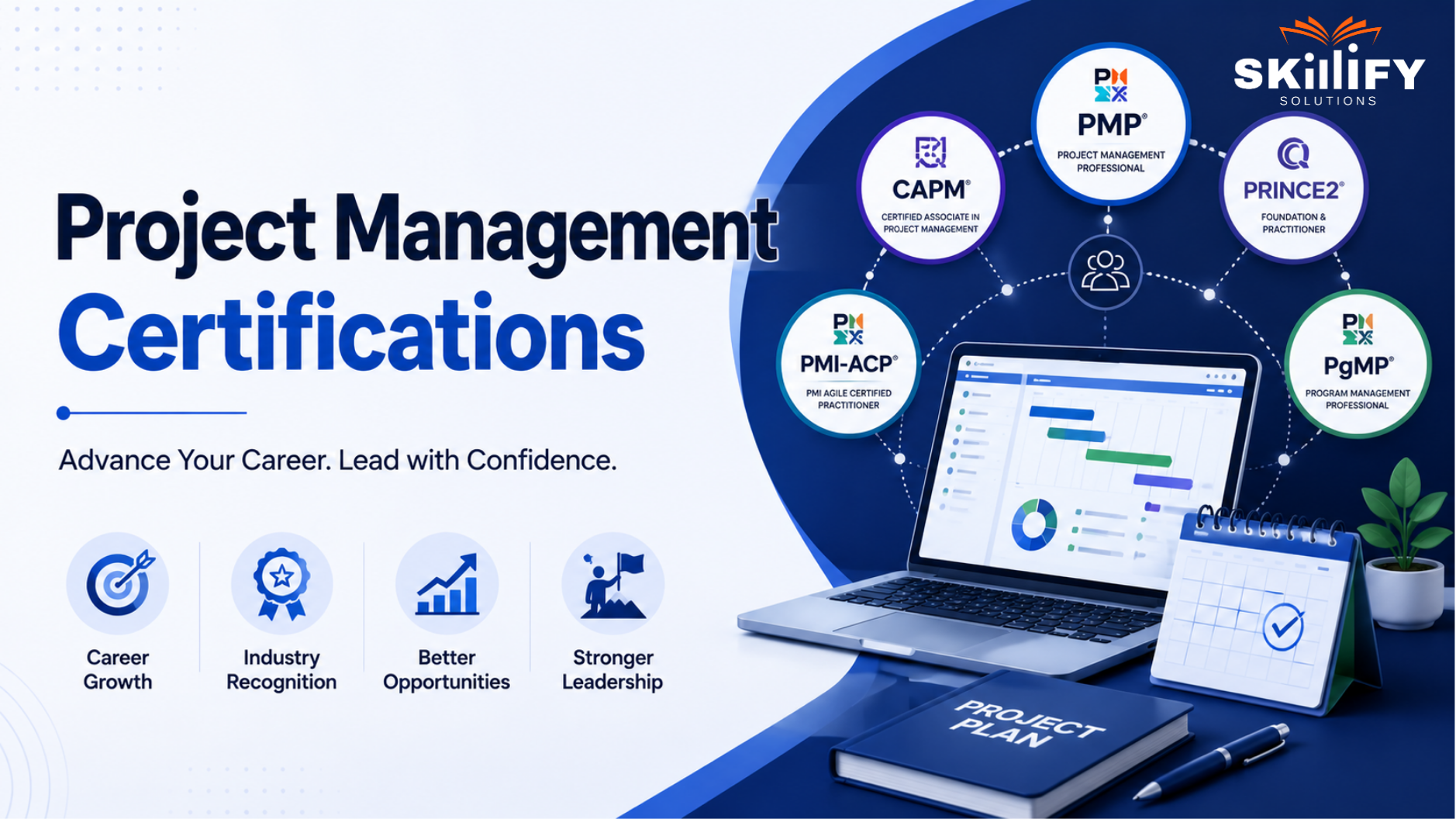
Key Highlights of Project Management Certifications
- Compare the top project management certifications for career growth.
- Discover the best project management certifications 2026.
- Learn PMP vs PRINCE2 2026: which is better.
- Compare the project management certifications list salary.
- Explore Agile project management certifications USA.
- Check PMP certification cost 2026 USA exam fee.
The best project management certification in 2026 depends on where you are in your career, not on what’s trending. I’ve seen professionals spend thousands on the wrong certification simply because it was popular, only to realize later it didn’t match their experience or career goals.
Others chose strategically and landed promotions, higher salaries, or leadership roles within months. That’s the difference the right certification makes. With options like PMP, CAPM, PRINCE2, PMI-ACP, CSM, PSM I, and SAFe certifications, it’s easy to feel overwhelmed.
This blog cuts through the confusion by comparing costs, salaries, eligibility, difficulty, and career outcomes. By the end, you’ll know exactly which certification delivers the best return on investment for your goals. Read on to know more!
Top Project Management Certifications: How to Choose the Right One
The best project management certification depends on your experience, career goals, and the project delivery approach used in your organization.
| Experience Level | Recommended Certifications | Best For |
| Beginner | CAPM, CSM, PSM I | Students, graduates, and aspiring project managers |
| Intermediate | PMI-ACP, PMP | Project coordinators and experienced project managers |
| Experienced | PRINCE2, Leading SAFe | Professionals managing complex or enterprise projects |
| Senior | PgMP, SAFe RTE | Program managers and Agile leaders |
| Enterprise Leaders | SAFe SPC | Agile transformation consultants and coaches |
Advance your leadership career with our Leading SAFe 6.0 course and confidently lead enterprise Agile transformations.
Traditional vs Agile vs Enterprise Project Management Certifications
Different certifications align with different project management approaches. Choose one based on the type of projects and teams you manage.
| Category | Certifications | Best Suited For |
| Traditional | PMP, CAPM, PRINCE2, PgMP | Predictive and hybrid project management |
| Agile | PMI-ACP, CSM, PSM I | Scrum and Agile project teams |
| Enterprise Agile | Leading SAFe, SAFe RTE, SAFe SPC | Large-scale Agile transformations |
Professionals planning an Agile career should also explore the Agile Project Management course before choosing between Scrum and enterprise Agile certifications.
How the PMP Exam 2026 Update Affects Your Decision
The PMP exam 2026 continues to evaluate predictive, Agile, and hybrid project management skills. The upcoming PMBOK 8 is expected to expand its focus on AI-assisted project delivery, digital transformation, leadership, and value-driven outcomes.
If you’re planning to pursue PMP, preparing with the latest exam objectives will help you stay aligned with current industry practices.
Best Traditional Project Management Certifications
Traditional project management certifications are best suited for professionals managing predictive and hybrid projects.
PMP Certification for Experienced Project Managers
PMP is PMI’s flagship certification and one of the most recognized project management credentials worldwide. It validates leadership, project delivery, risk management, and stakeholder management skills across industries.
- Best for: Experienced project managers leading predictive, Agile, or hybrid projects.
- Pros: Globally recognized, high-salary potential, valued across industries, supports Agile and hybrid projects.
- Cons: Requires project management experience, rigorous exam, renewal every 3 years.
- Training: It offers instructor-led Project Management training covering PMP and PRINCE2.
- Exam Fee: $425 (PMI member) and $675 (non-member).
PMP-certified professionals also benefit from mastering modern Project Management Tools used to plan, execute, and monitor projects efficiently.
CAPM Certification for Beginners
CAPM is PMI’s entry-level certification that builds a strong foundation in project management concepts and prepares candidates for future PMP certification.
- Best for: Students, graduates, and career changers with little or no project management experience.
- Pros: No experience required, PMI-recognized, ideal steppingstone to PMP.
- Cons: Less more valuable than PMP for experienced professionals and requires renewal every three years.
Exam Fee: $225 (PMI member) / $300 (non-member).
PRINCE2 Certification for Government and Global Projects
PRINCE2 is a process-based project management methodology focused on governance, defined roles, and controlled project delivery. It is widely recognized across the UK, Europe, and multinational organizations.
- Best for: Professionals managing government, public sector, and international projects.
- Pros: Strong international recognition, structured methodology, ideal for government projects, works with Agile approaches.
- Cons: Less common than PMP in North America, methodology-focused, practitioner certification requires renewal.
Pricing: Typically $500–$900, depending on the certification level and training provider.
Build strategic portfolio management skills through the SAFe Lean Portfolio Management 6.0 course and drive organizational business value.
PgMP Certification for Program Managers
PgMP validates expertise in program governance, benefits realization, strategic alignment, and executive stakeholder management. It is designed for experienced leaders overseeing enterprise-wide initiatives.
- Best for: Senior professionals managing multiple strategic programs.
- Pros: Prestigious senior-level credential, demonstrates strategic leadership, boosts executive career growth.
- Cons: Strict eligibility requirements and challenging assessment process.
- Exam Fee: $800 (PMI member) / $1,000 (Non-member).
Best Agile Project Management Certifications
Agile project management certifications are ideal for professionals working in Scrum, Kanban, Lean, and hybrid environments. They validate Agile practices, team collaboration, and iterative project delivery skills.
PMI-ACP Certification
PMI-ACP validates knowledge across multiple Agile frameworks, including Scrum, Kanban, Lean, XP, and TDD. It is suited for project managers working with cross-functional Agile teams.
- Best for: Experienced professionals managing Agile and hybrid projects.
- Pros: Covers multiple Agile frameworks, globally recognized, suitable for hybrid projects.
- Cons: Requires Agile project experience and renewal every 3 years.
- Exam Fee: $435 (member) / $495 (non-member).
Professionals working in Agile environments can further strengthen their practical skills with the SAFe Scrum Master 6.0 course.
Certified ScrumMaster (CSM)
CSM introduces Scrum principles, roles, events, and artifacts. It is a popular certification for Scrum Masters, Agile team members, and professionals transitioning to Agile.
Best for: Beginners and professionals working in Scrum teams.
- Pros: Beginner-friendly, widely recognized, instructor-led learning.
- Cons: Requires renewal every 2 years and certification training before the exam.
- Exam Fee: Usually included with training; course fees vary by provider.
Professional Scrum Master (PSM I)
PSM I validates practical Scrum knowledge through a rigorous assessment. Unlike many certifications, it has no mandatory training requirement and does not expire.
- Best for: Scrum professionals seeking a lifetime certification.
- Pros: Lifetime certification, no mandatory training, globally respected.
- Cons: Challenging exam with a high passing score.
- Exam Fee: $200.
Best Enterprise Agile Certifications
Enterprise Agile certifications prepare professionals to lead Agile adoption across large organizations. They focus on scaling Agile, coordinating multiple teams, and driving enterprise-wide transformation.
If you’re moving from team-level Agile to enterprise delivery, the SAFe for Teams 6.0 course provides an excellent starting point.
Leading SAFe Certification
Leading SAFe provides an understanding of Lean-Agile principles, Agile Release Trains, and enterprise transformation. It is ideal for project managers moving into enterprise Agile leadership roles.
- Best for: Managers and leaders implementing Agile at scale.
- Pros: Strong enterprise recognition covers Lean-Agile practices, suitable for leadership roles.
- Cons: Certification renewal required annually.
Training: Typically completed in a 2-day instructor-led course.
If you’re transitioning from traditional project management to enterprise Agile, the Leading SAFe (SA) course offers a strong foundation in Lean-Agile principles.
SAFe Release Train Engineer (RTE)
RTE develops facilitation, coaching, and program execution skills needed to coordinate multiple Agile teams and deliver value across the enterprise.
- Best for: Professionals leading Agile Release Trains and large Agile programs.
- Pros: High demand in enterprise Agile organizations, strong leadership credentials.
- Cons: Best suited for experienced Scrum Masters and Agile leaders.
- Training: Typically delivered as a 3-day instructor-led course.
SAFe Practice Consultant (SPC)
SPC is an advanced enterprise Agile certification focused on implementing, coaching, and sustaining Lean-Agile transformations across organizations. It also authorizes professionals to train others within the framework.
- Best for: Agile coaches, consultants, and transformation leaders.
- Pros: Premium enterprise credential supports consulting and transformation leadership roles.
- Cons: Advanced certification requiring significant Agile experience.
- Training: Typically delivered as a 4-day instructor-led course with certification exam.
If your organization follows both predictive and enterprise Agile approaches, pairing PMP with Leading SAFe 6.0 can broaden your leadership capabilities.
Project Management Certification Comparison (2026)
Compare the top project management certifications based on salary potential, cost, eligibility, and the time required to earn them.
Salary and Cost Comparison
| Certification | Typical Cost (USD) | Typical Role | Average Salary (USA) |
| PMP | $425–$675 | Project Manager, Senior Project Manager | $130,000 – $180,000 |
| PgMP | $800–$1,000 | Program Manager, Portfolio Manager | $114,000–$140,000 |
| SAFe SPC | $3,000–$4,000 | Agile Coach, Enterprise Agile Consultant | $146,000–$150,000 |
| SAFe RTE | $2,000–$3,000 | Release Train Engineer, Agile Program Manager | $149,000–$170,000 |
| Leading SAFe | $700–$1,200 | Agile Project Manager, Delivery Manager | $101,000–$126,000 |
| PMI-ACP | $435–$495 | Agile Project Manager, Agile Coach | $113,000–$130,000 |
| CSM | $300–$1,000 | Scrum Master, Agile Team Lead | $144,000–$160,000 |
| PSM I | $200 | Scrum Master, Scrum Coach | $145,000–$158,000 |
| PRINCE2 | $500–$900 | Project Manager, Project Coordinator | $60,000–$80,000 |
| CAPM | $225–$300 | Project Coordinator, Project Analyst | $120,000–$144,000 |
Salaries also vary by industry, location, and hiring demand, so reviewing the latest Project Manager Job Market trends can provide additional career insights.
Eligibility, Difficulty, and Time to Earn
Eligibility varies from no prior experience (CAPM, CSM, PSM I) to 3–8 years of project or program management experience (PMP, PgMP). Most candidates prepare for 2–8 weeks for beginner certifications.
However, PMP typically requires 2–4 months and PgMP 3–6 months of study. Choosing a certification that matches your experience level can improve your chances of passing the exam on the first attempt and maximize your career growth.
Develop customer-centric product strategies with the SAFe Agile Product Management 6.0 course and deliver products customers truly value.
Which Project Management Certification Should You Choose?
The right certification depends on your current experience, career goals, and the type of projects you want to manage. Whether you’re starting your career, moving into project management, or leading enterprise Agile transformations, choosing the right certification can accelerate your professional growth.
For Beginners and Career Changers
If you’re starting your project management career, focus on certifications that build strong fundamentals.
- CAPM: Best for students and fresh graduates.
- CSM: Ideal for beginners joining Scrum teams.
- PSM I: Great for professionals seeking a lifetime Scrum certification.
For Experienced Project Managers
Experienced professionals should choose certifications based on their specialization.
- PMP: Best for project management leadership.
- PMI-ACP: Ideal for Agile and hybrid project managers.
- PRINCE2: Suitable for government and international projects.
- PgMP: Designed for senior program managers.
Students building practical experience can also explore these Best AI Project Ideas for Students to strengthen their portfolios.
Best Certification Path for Enterprise Agile Leaders
If you want to lead Agile transformations, follow a structured certification path. Start with PMP or PMI-ACP, then progress to Leading SAFe, SAFe RTE, and finally SAFe SPC to develop enterprise Agile leadership expertise.
Project Management Certification ROI
A Project Management Certification is an investment that can lead to higher salaries, better job opportunities, and faster career growth. Evaluating its return on investment (ROI) helps you choose the right credential.
Which Certification Offers the Highest Salary Increase?
PMP, PgMP, and SAFe SPC typically deliver the highest salary growth due to their strong industry recognition and demand for experienced professionals.
How Quickly Can You Recover Your Certification Cost?
Many professionals recover their certification costs within 6–12 months through salary increases, promotions, or new job opportunities, depending on their role and experience.
How to Get Employer Sponsorship
Many organizations reimburse certification costs as part of employee development. Highlight the business benefits, improved project outcomes, and the value the certification brings to your role when requesting sponsorship.
As AI transforms project delivery, learning How to Use Claude for Job Search can also help you optimize resumes, prepare for interviews, and find relevant project management roles.
Conclusion
The right project management certification in 2026 is finding the best fit for your experience, career goals, and industry. Whether you’re starting with CAPM, advancing with PMP, specializing in Agile through PMI-ACP, CSM, or PSM I, or leading enterprise transformations with SAFe certifications, each credential offers unique career benefits.
Before making your decision, compare the cost, eligibility, salary potential, and long-term ROI. A well-chosen certification can strengthen your skills, increase your earning potential, and open new leadership opportunities.
Boost your enterprise Agile expertise with our SAFe certifications and stay ahead in the evolving job market!
Frequently Asked Questions
1.What is the most recognized project management certification?
PMP (Project Management Professional) is the most widely recognized project management certification worldwide and is valued across industries.
2.Is PMP still worth it in 2026?
Yes. PMP remains one of the top certifications for experienced project managers, offering strong career growth and higher salary potential.
3.Which project management certification pays the highest salary?
PgMP and SAFe SPC are among the highest-paying certifications, followed closely by PMP and SAFe RTE.
4.Can I get a project management certification without experience?
Yes. Certifications like CAPM, CSM, and PSM from Skillify Solutions are suitable for beginners and require little or no project management experience.
5.PMP vs SAFe: Which certification should I earn first?
If you manage projects, start with PMP. If you work in enterprise Agile environments, begin with Leading SAFe and progress to advanced SAFe certifications.
6.Which Agile certification is best in 2026?
Agile Project manager from Skillify Solutions is best for Agile project managers, CSM and PSM I are ideal for Scrum professionals, and Leading SAFe is best for enterprise Agile leader.


